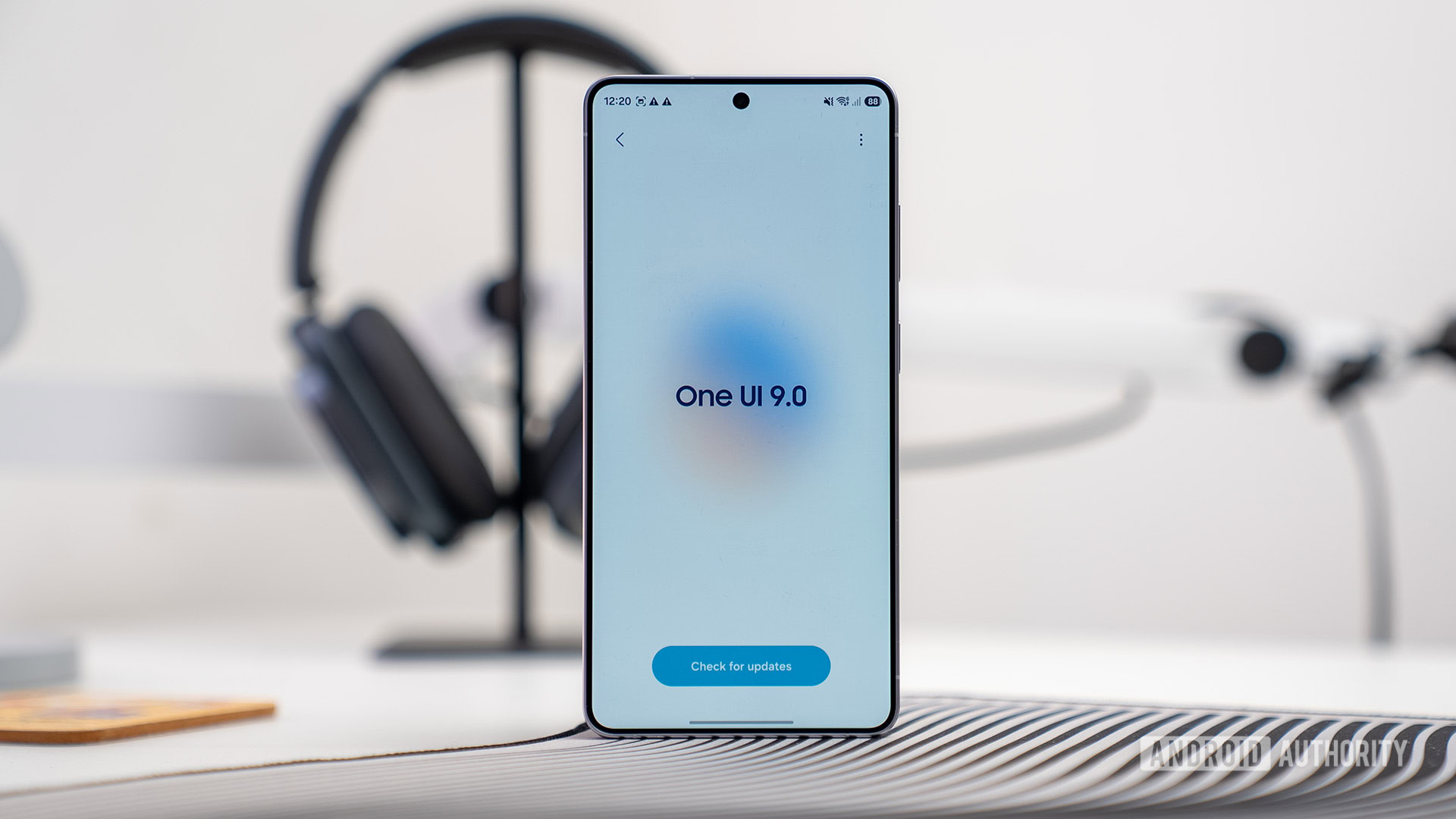
Samsung has spent the past several months deploying the stable release of its One UI 9 software update to eligible Galaxy smartphones. The major release was designed to bring updated operating system enhancements alongside Galaxy AI capabilities to older flagship devices. However, user feedback indicates that the deployment has introduced unexpected network and connectivity bugs for a segment of owners.
According to mounting discussion threads across Reddit and official Samsung Community forums, Galaxy owners are documenting a wide array of network failures that began immediately after completing the One UI 9 installation. Reported symptoms span unpredictable Wi-Fi dropouts, complete cellular data failures, and hardware identification errors where smartphones fail to detect installed SIM cards.
Intermittent Wi-Fi Disconnections and Band Recognition Flaws
Among the complaints cataloged by affected device owners, Wi-Fi instability appears to be the most prevalent issue. Multiple users report that their handsets establish a normal connection to wireless networks initially, only to abruptly disconnect after a period of use accompanied by a connection failed prompt. While toggling airplane mode on and off or executing a standard system reboot temporarily re-establishes the link, users note that the connection typically drops again after roughly two hours.
The underlying behavior of the Wi-Fi malfunction does not appear uniform across all hardware. One user documented an issue where their Galaxy device permanently failed to connect to their primary home Wi-Fi network despite other saved networks operating without incident. In another instance, an owner reported their phone successfully linked to 2.4GHz Wi-Fi networks but became entirely unable to connect to 5GHz bands, even though other household devices maintained stable connections across both frequencies.
Network services built on top of Wi-Fi infrastructure are also experiencing disruptions. An owner of a Galaxy Z Fold 7 reported that while their device successfully connects to standard wireless networks, Wi-Fi calling through carrier T-Mobile ceased functioning entirely following the installation of the One UI 9 update.
Some users have attempted community-driven workarounds to bypass the wireless issues. One documented potential fix involves navigating to Developer Options, accessing the Connectivity Labs menu, and manually disabling Wi-Fi 7 Mode. However, this workaround does not apply universally, as several affected users have observed that the Wi-Fi 7 toggle does not appear as an option within their specific device settings.
Mobile Data Failures and Ineffective Troubleshooting
In addition to home and office wireless networks, cellular data reception has been compromised for some Galaxy owners. Forum threads highlight scenarios where devices show an active cellular signal but refuse to transmit mobile data, leaving web applications unable to load content unless the handset is explicitly connected to an operational Wi-Fi network.
Standard software troubleshooting procedures have yielded little success. Users have attempted toggling airplane mode, running full network settings resets, and physically ejecting and reinserting their SIM cards, none of which resolved the data transmission stoppage. On the Samsung Community forums, a moderator suggested that impacted customers attempt booting their devices into Safe Mode or executing a complete factory data reset. Despite following these recommendations, at least one user confirmed that a full factory reset failed to restore cellular data functionality.
Unrecognized SIM Cards Across Multiple Models
Beyond data routing issues, the update has triggered deeper communication hardware failures for some users. A Reddit report detailed an incident involving a Galaxy A56 that completely stopped recognizing both of its installed SIM cards immediately after the One UI 9 upgrade. Diagnostic utilities run on the handset returned results indicating that no physical SIM was detected in either tray slot.
Similar reports of SIM detection failures have surfaced across other hardware tiers within the Galaxy lineup. Device owners have registered corresponding hardware recognition problems on the Galaxy A36, Galaxy A52s, and the flagship Galaxy S24 Plus.
The root cause behind the influx of network anomalies remains unconfirmed. While hardware degradation can cause similar failure states, the sudden emergence of identical symptoms across multiple smartphone tiers immediately following the installation of the stable One UI 9 build indicates that a software-level defect is the far more probable explanation. Samsung has been contacted regarding the reported connectivity bugs, and official clarification is pending.