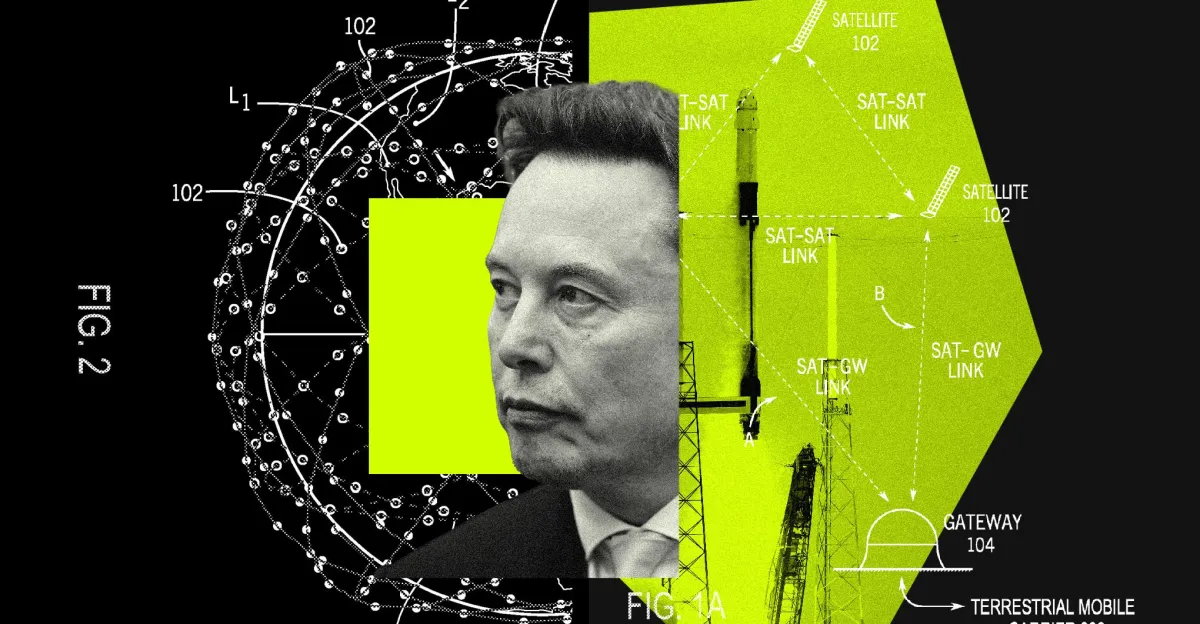
SpaceX is laying the groundwork to compete head-to-head with AT&T, Verizon, and T-Mobile in the wireless carrier market. Following recent multi-billion-dollar spectrum transactions and federal approvals to expand its orbital constellation, the aerospace company is transitioning from satellite broadband into direct mobile telecommunications. The initiative represents an ambitious effort to stand up what SpaceX describes as the world’s most advanced mobile network, challenging the entrenched legacy carriers across the United States.
Central to this expansion is SpaceX’s recent agreement to acquire a sizable portfolio of low-band 800 MHz spectrum for approximately $8 billion. This low-frequency airwave acquisition follows a previous agreement by SpaceX to purchase nearly $20 billion worth of spectrum assets from EchoStar. When paired with recent regulatory clearance from the Federal Communications Commission (FCC) authorizing the deployment of 15,000 next-generation Starlink satellites, the acquisitions outline a clear corporate pivot toward offering full-fledged mobile phone service.
The Critical Role of Terrestrial Low-Band Airwaves
While SpaceX built its Starlink broadband service entirely via orbital infrastructure, industry analysts note that delivering reliable mobile phone service requires a terrestrial footprint. Unlike high-gain satellite dishes mounted onto residential rooftops, commercial smartphones operate with limited transmission power and frequently connect from deep within indoor structures. As a result, orbital links alone cannot consistently maintain mobile connectivity inside homes or congested metropolitan zones.
Low-band frequencies such as the 800 MHz band are vital to solving this physics constraint. Low-frequency signals travel further across landscapes and penetrate physical obstacles like concrete and exterior walls far more effectively than higher-frequency bands. By securing these airwaves, SpaceX secures the foundational physical layer required to construct ground-based cellular sites. This complementary terrestrial network will work alongside its satellite fleet, mirroring the hybrid tower-and-satellite model historically utilized by operators such as Sirius Satellite Radio.
The 800 MHz spectrum possesses a complex corporate pedigree in the telecommunications industry. Originally deployed by Nextel for its push-to-talk service, the spectrum passed to Sprint and was subsequently slated for divestiture as part of federal regulatory conditions attached to T-Mobile’s acquisition of Sprint. The government initially designated the frequencies for EchoStar to bolster Charlie Ergen’s bid to establish Dish Network as a viable national competitor. However, after Dish failed to assemble the capital required to purchase the spectrum, the assets were held by private equity firm Grain Management before SpaceX stepped in.
Echoes of Past Telecom Industry Stumbles
SpaceX’s push into wireless infrastructure enters an industry historically unforgiving to new entrants. Legacy carriers like Verizon and AT&T have invested hundreds of billions over several decades to purchase spectrum licenses, deploy macro tower sites, and manage churn. Observers note that incumbent carriers previously chose not to foreclose SpaceX’s entry by outbidding on the 800 MHz band, perhaps underestimating the aerospace company’s willingness to absorb the costs of building a ground network.
Recent history highlights the extreme technical and financial hurdles facing market challengers. Dish Network previously attempted to build a greenfield fourth carrier using Open Radio Access Network (O-RAN) architecture running on Amazon Web Services (AWS) to cut capital expenditures. Despite technical promises, Dish struggled with handset ecosystem compatibility, sustained network deployment, and market adoption, ultimately relying on wholesale roaming agreements with legacy telcos. Earlier, SoftBank under Masayoshi Son attempted to reinvent Sprint through low-cost small-cell densification, a project that struggled and eventually culminated in Sprint’s sale to T-Mobile.
Despite those cautionary precedents, analysts highlight that SpaceX holds distinct strategic advantages over prior failed challengers, most notably the direct brand reach and customer acquisition power of Elon Musk. Similar to T-Mobile’s turn under former chief executive John Legere, which secured rapid subscriber gains before Deutsche Telekom backfilled capital into network infrastructure, SpaceX could leverage its brand visibility to attract users early before completing its full physical infrastructure buildout.
The Complex Economics of Orbital and Ground Networks
Despite these strengths, building both orbital and ground networks simultaneously presents steep economic hurdles. SpaceX is not pursuing a low-cost network model; launching 15,000 advanced satellites alongside terrestrial cellular towers demands significant capital expenditure. Furthermore, establishing nationwide coverage early on typically requires commercial roaming or mobile virtual network operator (MVNO) agreements with established carriers, who have little financial incentive to offer favorable terms to an emerging competitor.
Even so, the hybrid model offers strategic differentiation. While emergency messaging capabilities from players like Apple rely on basic satellite links provided by Globalstar in remote areas, SpaceX’s hybrid platform aims for standard mobile connectivity. High-powered orbital satellites can plug persistent suburban dead zones where local land-use restrictions and neighborhood opposition prevent carriers from constructing macro towers, giving SpaceX a unique mechanism to bridge coverage gaps that traditional telcos have struggled to solve.