


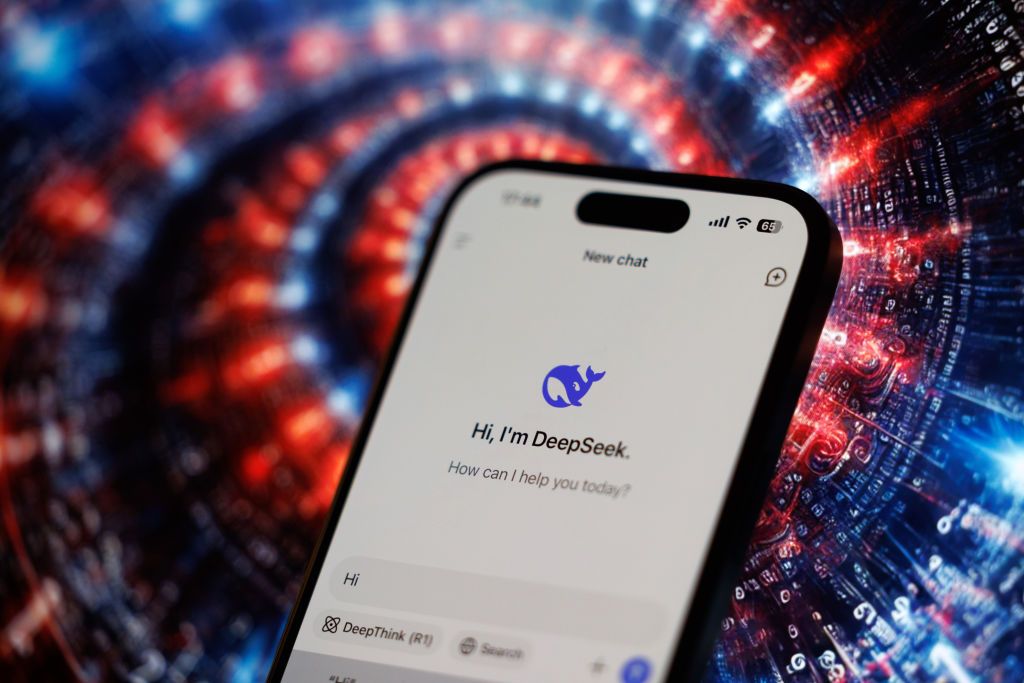
The United States government has instructed federal civilian agencies to halt the procurement of products and services developed by Chinese artificial intelligence company DeepSeek and purge existing deployments from official information technology networks. The directive, issued by the Department of Homeland Security, extends beyond DeepSeek’s proprietary applications to encompass third-party products and software built upon the startup’s underlying technology, though agencies have been granted the ability to request formal exemptions.
National Security and Data Access Concerns
The Department of Homeland Security grounded the mandate in national security considerations linked to DeepSeek’s physical and corporate presence in China. In its order, the department warned that the company’s data management practices could leave sensitive information belonging to U.S. government users exposed. Under Chinese statutory frameworks, authorities in Beijing could potentially compel the company to disclose data collected across its systems, creating vulnerabilities for federal operations.
The administrative action marks an escalation in Washington’s defensive measures concerning foreign-developed artificial intelligence. Previous federal restrictions were established in December 2025, when legislation targeted the use of DeepSeek inside intelligence community IT and designated national security systems. The latest action broadens that boundary to cover civilian departments, mandating both a ban on future contracts and the active removal of current software instances across civil government infrastructure.
Beijing Rejects Federal Directive
Officials in Beijing issued a sharp rebuke following the announcement of the federal mandate. Chinese Foreign Ministry spokesperson Mao Ning criticized the restrictions during an official briefing, stating that the Chinese government opposes what it views as overstretching national security concepts to politicize commercial technology and bilateral trade matters. The spokesperson emphasized that Beijing will resolutely defend the legitimate rights and corporate interests of Chinese enterprises operating in the global market.
The bilateral friction unfolds against a backdrop of wider regulatory and technological controls. According to a Bloomberg report, Chinese authorities have been weighing export restrictions across 23 categories of AI-related technologies, a list that encompasses advanced semiconductor designs and selected frontier artificial intelligence models, aimed at managing misuse and national security vulnerabilities.
Market Disruption and Model Distillation Disputes
DeepSeek emerged as a high-profile challenger to American artificial intelligence leaders, including OpenAI and Meta, by releasing low-cost, open-weight systems that narrowed the performance gap with proprietary models. The startup originally drew global regulatory focus and rattled international markets in January 2025, when the unveiling of its R1 reasoning model triggered significant volatility across the technology sector, culminating in a sharp sell-off in Nvidia shares.
Alongside competitive pressures, the company has faced mounting intellectual property and methodological scrutiny from American tech firms and government entities. A September report revealed that U.S. officials accused DeepSeek alongside five other Chinese artificial intelligence entities, including Moonshot AI and Alibaba, of employing large-scale model distillation techniques to extract operational data and capabilities from American AI platforms.
Model distillation involves leveraging the outputs generated by a larger, pre-trained AI architecture to train and refine a separate model. Both OpenAI and Anthropic have independently lodged complaints regarding DeepSeek’s development methods. OpenAI informed congressional lawmakers that it detected suspected efforts by DeepSeek to distill outputs from its proprietary models. Similarly, Anthropic reported identifying unauthorized access campaigns conducted by DeepSeek and other Chinese artificial intelligence laboratories aimed at harvesting outputs generated by its Claude model family.