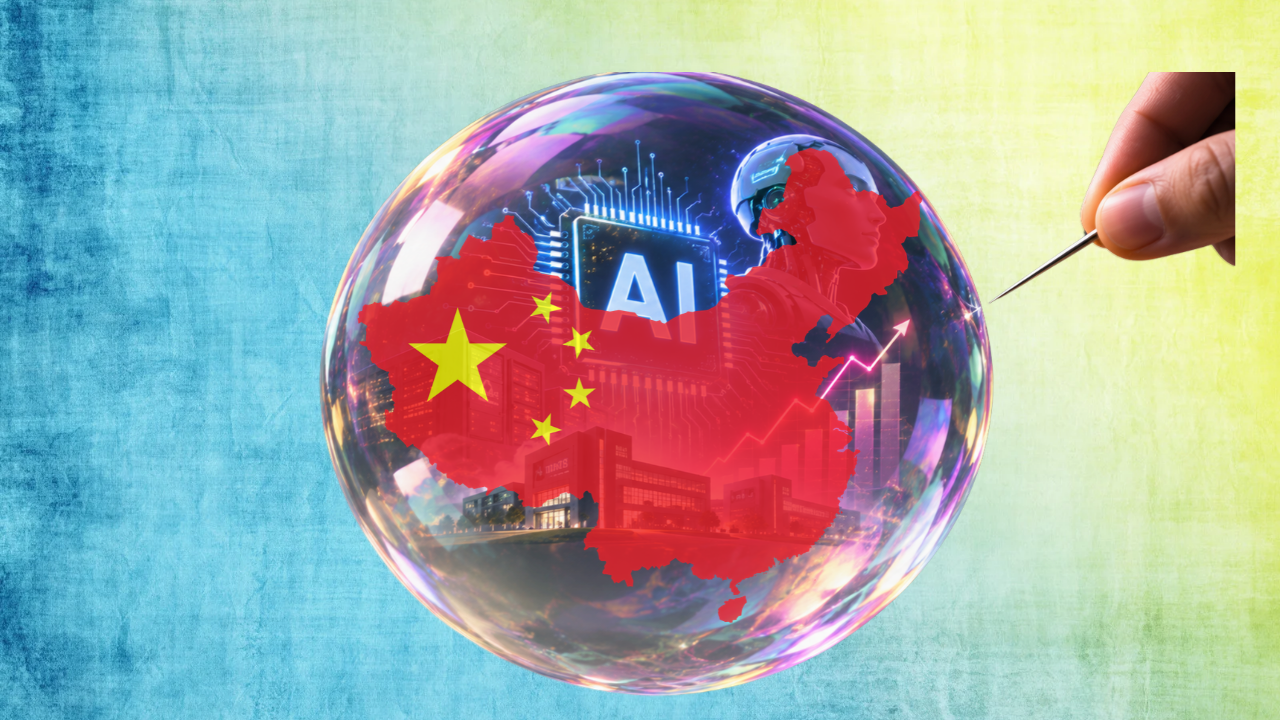
China’s artificial intelligence (AI) and semiconductor industry is facing a major stock market downturn, with approximately $480 billion in market value wiped out in less than four months.
The STAR50 index, which tracks major technology and semiconductor companies, has dropped around 40%, while China’s CSI 300 index has declined approximately 20% from its June highs.
The sharp reversal follows a period of rapid growth driven by investor enthusiasm for AI, robotics and advanced chip technologies.
The decline has raised concerns about high company valuations and whether the growing demand for artificial intelligence can justify earlier market expectations.
Several prominent Chinese technology companies have experienced significant losses as investors reconsider their positions.
Robotics company Unitree has reportedly seen its shares fall by around half since beginning trading, while chipmakers MetaX Integrated Circuits and Moore Threads Technology have also lost substantial market value.
Meanwhile, optical component manufacturers Zhongji Innolight and Eoptolink Technology have recorded declines of approximately 60% from their earlier peaks.
Concerns over potential restrictions on Chinese technology suppliers, rising costs and uncertainty surrounding future AI demand have added pressure to the sector.
The downturn could also affect technology companies planning stock market listings and seeking fresh investment.
The Chinese AI market slowdown could also have implications for Pakistan’s technology sector, particularly startups and businesses that depend on Chinese AI models, cloud services, chips and smart devices.
A prolonged decline could encourage Chinese technology companies to offer more competitive prices in international markets, potentially creating opportunities for Pakistani fintech firms, software companies and e-commerce businesses. However, financial pressure on technology providers could also lead to mergers, reduced investment or changes in service availability.
Pakistani businesses may therefore need to consider both affordability and long-term reliability when choosing AI suppliers. While the market correction does not necessarily signal the end of AI development, it highlights the financial risks associated with speculative investment and the importance of sustainable growth in the global artificial intelligence industry.