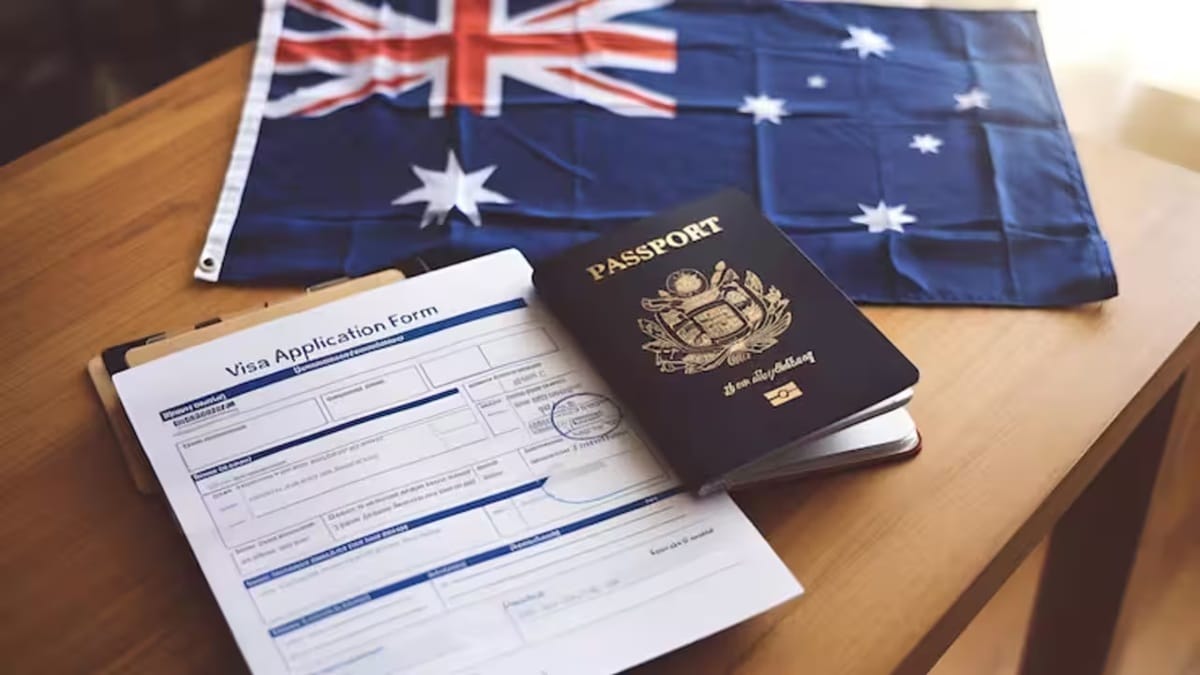
The Australian government is weighing significant revisions to its student visa framework, reviewing proposals that could require prospective international students to deposit tuition fees and living expenses into Australian bank accounts before lodging their visa applications.
Australia’s Department of Home Affairs launched a public consultation on the measures in response to concerns regarding elevated visa rejection rates, which have notably affected candidates from South Asian nations. The consultation window opened on October 30 and is scheduled to conclude on November 23, 2026.
Four Financial Capacity Options Under Review
To strengthen the verification of applicant finances, authorities are examining four potential models. The first pathway under consideration would mandate that applicants deposit 50 percent of their entire course tuition fees and living costs into an eligible Australian bank account for a minimum of one month, subject to withdrawal restrictions.
A second proposal outlines a similar requirement to hold 50 percent of total tuition and living costs in an Australian account for three months, but without placing restrictions on fund withdrawals.
Under a third proposed framework, international students would be required to deposit 100 percent of their first-year tuition fees and living expenses into an Australian bank account for three months, accompanied by potential limitations on accessing the deposited capital.
A fourth alternative would preserve flexibility by permitting students to establish financial readiness through approved education loans, scholarships, personal savings, or a combination thereof. Under this fourth option, limited exemptions from transferring funds into an Australian account could also be granted.
Revisions to Evidence Levels and Loan Verification
Under the broader package of proposals, international students would be required to provide financial documentation alongside their visa applications, irrespective of their education provider’s assigned Evidence Level classification.
Applicants originating from countries designated under Evidence Level 3 could face intensified scrutiny. These additional checks may include the submission of official bank statements documenting at least six months of transaction history.
The Department of Home Affairs is also reviewing guidelines around education financing. Under the proposed measures, secured and government-backed education loans would be prioritized and favored over unsecured personal borrowing. Officials noted, however, that these temporary proposals would not raise the total baseline amount of funds students are currently required to prove.
Genuine Student Assessment and Sector Response
In addition to financial oversight, the consultation addresses reforms to the Genuine Student assessment mechanism. The revised process aims to place heavier analytical weight on an applicant’s academic history, chosen course of study, and previous educational advancement.
Speaking at the Australian International Education Conference 2026 in Sydney, Assistant Minister for International Education Julian Hill stated that high refusal figures have deterred genuine candidates from considering Australian institutions. Hill observed that prospective students increasingly worry an Australian visa rejection could negatively impact their ability to secure study permits in other destinations.
Hill dismissed suggestions that the surge in visa refusals was driven by migration caps or targets, explaining that regulators are primarily focused on identifying applicants who lack the realistic financial resources to fund their education without relying on long-term migration.
The proposed policy shifts arrive amid mounting concern across Australia’s higher education sector regarding falling approval volumes. Renée Leon, Vice-Chancellor of Charles Sturt University, noted that official government statistics indicate offshore higher education student visa approvals have dropped by more than 40 percent compared to the prior year. Leon emphasized the need for unambiguous eligibility criteria before students commit to paying the non-refundable $2,500 visa application fee.
The Australian government has reiterated that no final determinations have been enacted, confirming that all policy adjustments will be evaluated following the close of the consultation process.