The Enormous Capital Barrier to US Wireless
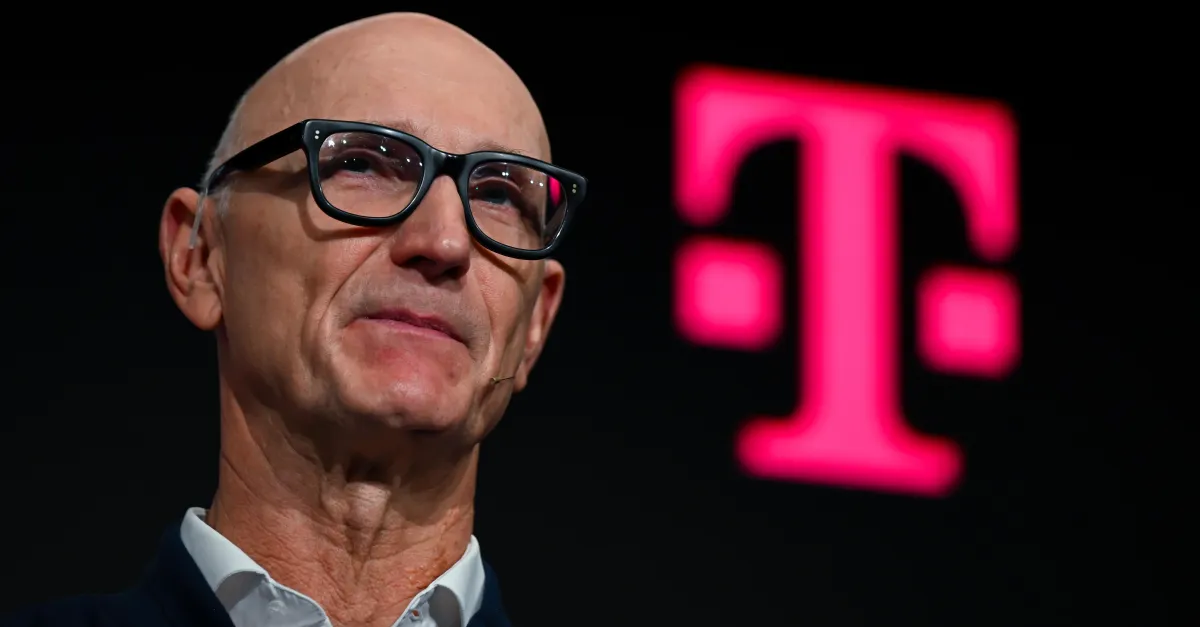
The leadership of T-Mobile parent company Deutsche Telekom is questioning the financial viability of SpaceX’s ambition to build a major wireless carrier in the United States, projecting that the effort will require hundreds of billions of dollars in capital investment. Speaking during an earnings call on Thursday, Deutsche Telekom Chief Executive Officer Tim Höttges stated that while he takes the Elon Musk-led venture super serious, mounting a full-scale competitive carrier will cost SpaceX a minimum of $200 billion.
Höttges outlined the massive scale differential between existing wireless giants and the nascent Starlink Mobile operation, pointing specifically to spectrum holdings and physical infrastructure. Höttges noted that Musk has secured 76 megahertz of spectrum, whereas Deutsche Telekom holds 400 megahertz. To acquire a comparable spectrum footprint prospectively, Höttges estimated that an entrant would need to spend triple-digit billions.
Beyond radio spectrum, establishing a viable nationwide footprint requires expansive terrestrial hardware. Höttges highlighted that Deutsche Telekom operates 85,000 towers across its network. Even if SpaceX opts to lease rather than construct physical masts, Höttges calculated that renting tower access would demand an additional $20 billion to $30 billion. The costs continue with outfitting those sites with antennas and associated networking equipment, regardless of whether hardware can be sourced or engineered more economically.
Taking those factors together, Höttges concluded that SpaceX would need at least $200 billion to mount a serious challenge in a sector that incumbent carriers have spent two decades professionalizing, summarizing his stance with the comment: welcome to the party.
SpaceX’s Terrestrial and Satellite Strategy
The executive remarks follow SpaceX’s disclosure last month detailing plans for Starlink Mobile to take on major US carriers including T-Mobile, AT&T, and Verizon. The proposed architecture relies on a hybrid model that blends direct-to-cell satellite technology with a conventional terrestrial cellular footprint.
Recent reporting suggests SpaceX could leverage approximately 80,000 cell towers across the US to support terrestrial coverage, alongside separate reports indicating that Musk has engaged in discussions regarding a potential acquisition of Boost Mobile. Adding technological weight to the expansion, Qualcomm announced this week that SpaceX will utilize its cellular infrastructure technology to assist in building out the Starlink Mobile network.
Lessons from the Automotive Industry
Despite outlining the daunting financial hurdles, Höttges made clear that traditional telecommunications providers cannot afford to dismiss the venture. He emphasized the broad convergence of technical assets under Musk’s control, citing access to proprietary chipsets, data centers, artificial intelligence capabilities, and satellite constellations.
Höttges suggested that SpaceX could integrate social media platforms or AI agent models directly into its communications offerings to deliver a fundamentally new kind of connectivity service. Drawing a parallel to the rise of Tesla, Höttges recalled how the traditional automotive sector initially disregarded Musk’s electric vehicle ambitions for too long before being forced to confront the disruption.
While acknowledging the competitive threat and stating that legacy telecom operators must face the situation head-on, Höttges reiterated that building a wireless carrier remains an immensely expensive undertaking, noting that just as in the car industry, it is not a free lunch.