

Tesla Prepares to Conclude the Cybertruck Era
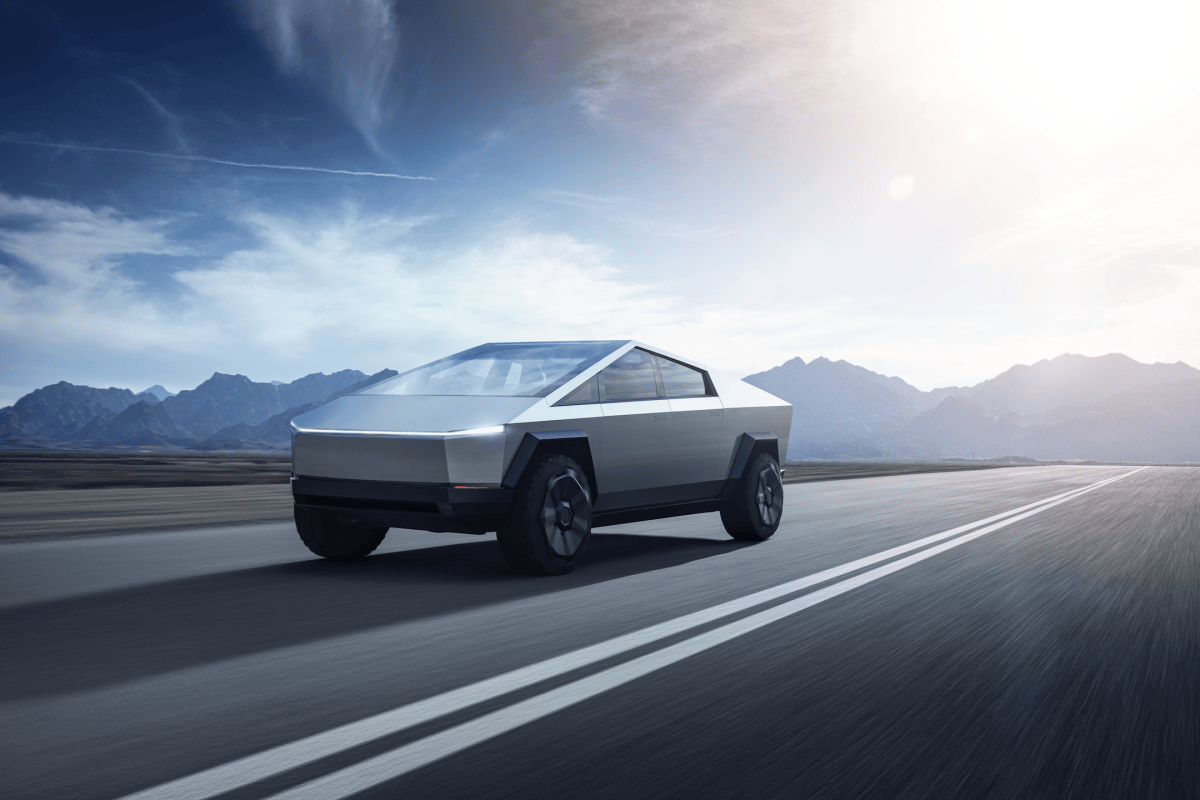
Tesla is preparing to halt production of the Cybertruck next year, Chief Executive Officer Elon Musk confirmed, bringing an abrupt conclusion to one of the most unconventional automotive programs in modern electric vehicle history. The decision signals the end of a vehicle journey that began almost seven years ago, when Tesla first unveiled the stainless-steel pickup during an event marked by broken armored glass demonstrations and polarized public reactions.
While early interest appeared substantial—with reservations climbing to roughly one million according to remarks made by Musk during a third-quarter earnings call in 2023—consumer demand struggled to transition into sustained commercial volume. Deliveries commenced in November 2023, but industry analysts calculate that only approximately 71,000 units have been sold to date. The vehicle faced headwinds after failing to fulfill core launch targets, including an initially promised starting price below $40,000 and an anticipated driving range of 500 miles on a single charge.
Autonomous Delivery Sees Massive Capital Influx
As consumer electric pickup momentum cools, autonomous logistics and delivery platforms are capturing historic levels of investment. Drone logistics firm Zipline secured $1.5 billion in a new financing round, lifting its enterprise valuation to $21.5 billion. Founded in 2014, the autonomous aviation startup has rapidly scaled its footprint across 2026. Prior to this latest infusion, the company raised $600 million earlier in the year and promptly added $200 million to that Series H tranche to support urban network expansion across at least four U.S. cities.
Alongside the fresh capital, Zipline announced a significant expansion of its retail arrangement with Walmart, adding 300 drone delivery locations throughout the United States. Sidewalk and localized logistics are evolving in parallel. Serve Robotics unveiled plans to introduce a dedicated commercial unit named Physical AI Services. Under this new structure, Serve will maintain and grow its own autonomous delivery fleets while serving as a commercial hardware and software technology supplier to third-party robotics developers.
Self-driving ground technology is also capturing military attention. Autonomous vehicle companies May Mobility and Forterra advanced to phase three of the U.S. Department of Defense’s Robotic Operations for Autonomous Delivery and Sustainment prize challenge, known as ROADS. The initiative tests commercial autonomous transport systems for potential operational integration within defense applications.
Commercial Fleet Electrification and Early-Stage Robotics Funding
Capital markets continue to direct resources toward commercial vehicle electrification and early-stage automation. Electric truck manufacturer Harbinger closed a $240 million Series D investment round. The commercial chassis startup intends to channel the funding toward expanding its product catalog, which now includes battery storage solutions alongside defense sector offerings. The company did not disclose its updated valuation.
In early-stage robotics, Humble Robotics completed a $51 million Series A round, lifting its total capital raised to $75 million within its first year of operation. The funding round was spearheaded by Obvious Ventures, with capital contributions coming from internal investors including Eclipse and Energy Impact Partners.
Corporate realignment has also surfaced in micromobility. Also, the micro-transport startup spun out of electric automaker Rivian in 2025, ended an electric two-wheeler pilot initiative in Kenya earlier this year. The startup quietly initiated and subsequently withdrew from the regional program in order to consolidate capital and engineering resources around its consumer electric bicycle line and self-driving transport projects.
Ride-Hailing Platforms Navigate AI Hype and Shifting Alliances
Data from leading ride-hailing networks reveals a notable gap between corporate AI forecasts and real-world consumer behavior. Despite widespread technology industry predictions that autonomous AI agents would soon manage consumer bookings, Uber disclosed on its third-quarter earnings call that only four rides were booked via AI agents during its busiest operational week in October, which coincided with Halloween celebrations.
Broader platform relationships in autonomous mobility are also transforming. Autonomous vehicle operator Waymo confirmed it will terminate its market exclusivity arrangement with Uber in Austin and Atlanta beginning in January 2028, concluding months of industry speculation over the long-term structure of their partnership.
Elsewhere in consumer services, Amazon selected Uber Eats as its official restaurant delivery collaborator for Prime subscribers across the United States. The agreement formalizes a new delivery ecosystem for Prime members while effectively terminating Amazon’s prior dining delivery arrangement with Grubhub.
Traditional Automakers and Digital Media Move Forward
Legacy automakers continue adjusting their customer data policies and high-end vehicle strategies. Ford Motor Company introduced what it termed a privacy promise, creating an explicit commitment to safeguard customer vehicle data and grant drivers control over data distribution. To support the initiative, Ford introduced an educational platform detailing how vehicular data is gathered, where it is utilized, and the direct settings drivers can adjust.
In luxury automotive, Ferrari announced that the Luce—its inaugural fully electric vehicle and an aesthetic departure from historical sports car styling—is now fully allocated for its scheduled 2027 production run. Meanwhile, in automotive publishing, digital network Static Media expanded its network by acquiring vehicle news outlet CarScoops, integrating the site into a 34-brand digital portfolio that includes Jalopnik, Engadget, and SlashGear.