


New York state is advancing regulatory oversight of the artificial intelligence sector as it prepares to enforce the RAISE Act, a comprehensive safety and transparency measure targeting major frontier AI labs. The state has formally opened its registration portal, establishing a deadline of January 1, 2027, for qualifying developers such as OpenAI and Anthropic to register with authorities.
Thresholds and Compliance Mandates
The RAISE Act takes effect at the beginning of the year and focuses specifically on large-scale AI developers generating more than $500 million in annual revenue. Under the statute, these organizations are legally required to publicly host their safety frameworks on their websites, release model transparency reports to the public, and report critical safety incidents to regulators within a 72-hour window.
Oversight and implementation will be directed by the newly established Office of Digital Innovation, Governance, Integrity, and Trust (DIGIT). The agency has been tasked with supervising frontier AI labs and monitoring adherence to the statute. Noncompliance carries significant financial consequences: fines can reach up to $1 million for an initial infraction and up to $3 million for repeat violations. State officials also maintain the authority to pursue enforcement proceedings against entities that fail to complete portal registration, though specific mechanisms for those actions have not been detailed.
State Leadership and Research Oversight
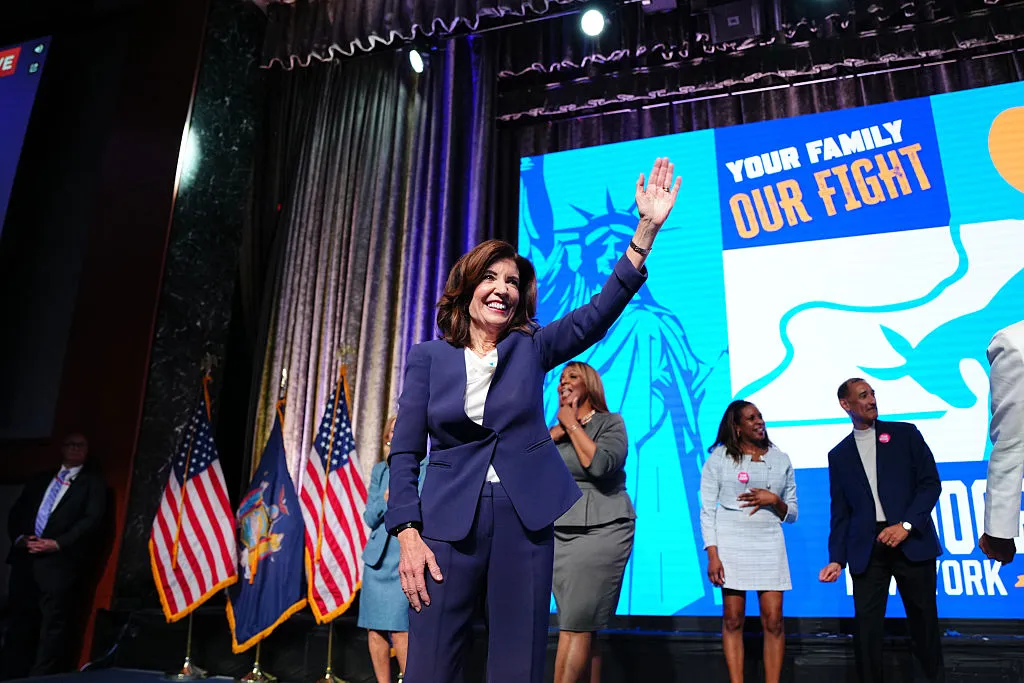
Addressing the initiative at a press briefing, New York Governor Kathy Hochul underscored the state’s intent to set guardrails around advanced automated systems. Hochul criticized industry narratives suggesting unchecked deployment is an inevitability, arguing that public welfare must not be subordinated to commercial competition.
Alongside the portal launch, Hochul announced the establishment of the New York Center for AI Responsibility and Research, situated at the State University of New York at Binghamton. Backed by $55 million in capital and donations initially announced in January, the research center will perform independent evaluations focused on the safety, security, and functional performance of advanced AI architectures. The institution will work in coordination with DIGIT to evaluate the technical safety frameworks submitted by commercial developers.
Broader Regulatory Context
The RAISE Act represents part of a wider push by New York lawmakers to police automated software. Last year, the state began enforcing rules requiring conversational AI companion operators to disclose bot identities to users and deploy reasonable mechanisms to detect indicators of self-harm and suicidal ideation. Additionally, legislation signed in October establishes protections for minors interacting with chatbots, prohibiting emotionally manipulative or sycophantic behavior, deceptive anthropomorphic interactions, and content encouraging disordered eating or suicide. That statute is scheduled to take effect on June 1, 2027.
New York’s approach parallels actions taken in other jurisdictions across the country. In California, SB 53 took effect in January, requiring frontier AI developers to publish safety protocols, protect internal whistleblowers, and report critical safety events within 15 days. Meanwhile, Illinois passed SB 315, slated to take effect at the start of 2027, which incorporates transparency requirements along with mandatory independent safety compliance audits.