


Rethinking Reachability on Modern Displays
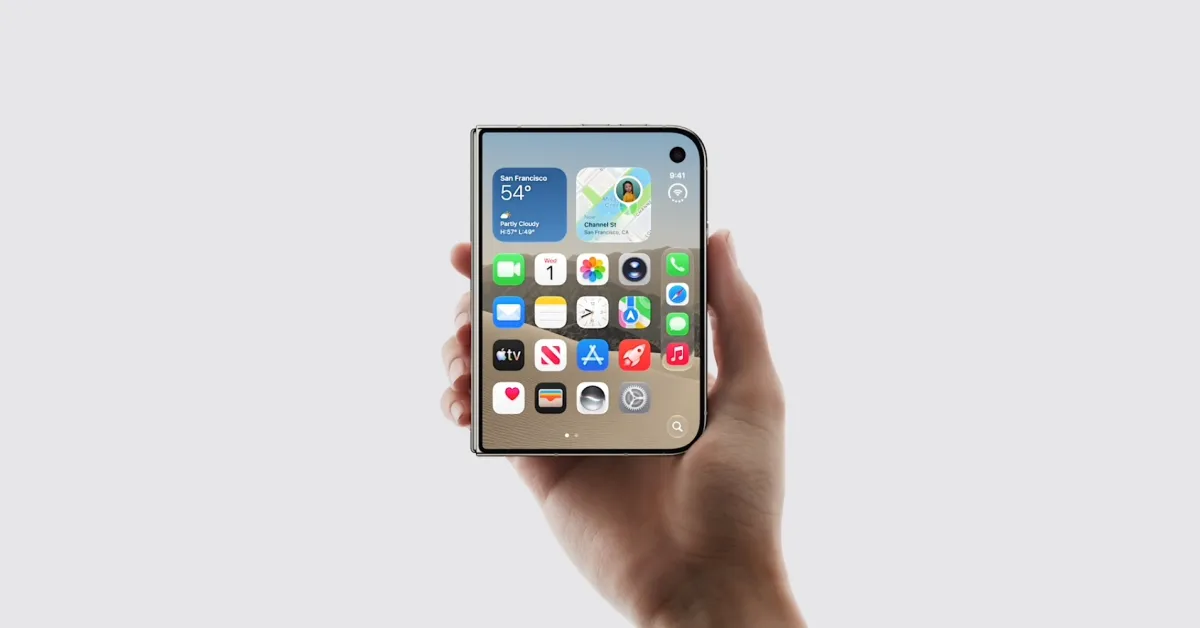
With the introduction of the iPhone Duo, Apple has overhauled conventional mobile navigation by reorienting primary interface controls around thumb reachability. The design departure challenges the long-standing industry habit of placing critical interactive elements near the top of the display, an ergonomic friction point that emerged as smartphones moved away from classic 16:9 dimensions to taller, bezel-free glass panels lacking physical home buttons.
Historically, smaller smartphone form factors allowed effortless one-handed control at the expense of media viewing area. As digital content consumption expanded, devices grew taller, making top-edge navigation progressively harder to reach during ordinary one-handed handling. The iPhone Duo layout attempts to address this compromise through its outer screen structure, which situates a standard rectangular viewing canvas on the left while dedicating the right-hand perimeter to a vertical dock and core navigation cluster. This arrangement keeps active content legible while anchoring essential system controls directly within thumb range.
The Emergence of the iPhone Solo Concept
The ergonomic shift on the Duo’s outer cover has generated significant attention among mobile enthusiasts, prompting discussions around a hypothetical non-folding model often dubbed the iPhone Solo. Proponents of the concept envision a conventional, single-panel device built specifically around the proportions and interface scheme introduced by the Duo’s cover screen. Rather than carrying the weight and mechanical complexity of a dual-screen foldable, an iPhone Solo would present users with a shorter, wider footprint optimized entirely for one-thumb utility.
While community concept designs have demonstrated strong user appetite for the layout, production of such a device remains unconfirmed and would likely depend on broader consumer reception to the iPhone Duo interface over time. In current software revisions, standard single-screen iPhones do not support a native side-dock orientation or the specialized Control Center placement engineered for the Duo’s outer shell.
Hardware Developments Surrounding the Foldable Lineup
The interface redesign arrives alongside broader hardware updates linked to Apple’s folding architecture. The company confirmed that the iPhone Duo incorporates a replaceable folding display layer, a physical design choice engineered specifically to minimize visible surface creasing across the central hinge mechanism over repeated use.
Apple has also initiated marketing efforts highlighting the device’s camera systems through its new Shot on iPhone Duo campaign. Simultaneously, the broader hardware landscape has encountered technical hurdles, with Apple confirming an ongoing cellular connectivity defect affecting iPhone 18 Pro Max units on the AT&T network. The company stated that the issue stems from hardware rather than software, requiring affected customers to undergo complete physical device replacements to restore proper network operation.
About The Author