


A Pivot to ‘Made by Google’ Hardware
On October 4, 2016, Google formally introduced the original Pixel and Pixel XL smartphones, marking a decisive strategic shift away from the developer-oriented Nexus program. The launch represented the debut of the dedicated Made by Google hardware portfolio, establishing a consumer-facing vision focused on deep software integration and computational photography. While the inaugural handsets lacked water resistance and stereophonic sound, their image processing capabilities set a fresh benchmark for mobile photography across the industry.
Refining the Camera and Establishing the A-Series
A year after the debut, Google released the Pixel 2 and Pixel 2 XL, introducing front-facing stereo speakers alongside the distinctive black-and-white Panda colorway. Despite facing consumer criticism over display viewing angles on the LG-manufactured Pixel 2 XL, the second-generation release firmly cemented Google’s position in computational image processing.
That momentum carried directly into the Pixel 3 and Pixel 3 XL, which debuted the Night Sight low-light imaging feature and the custom Pixel Visual Core coprocessor. The third-generation flagships also incorporated dual front-facing cameras equipped with an ultra-wide sensor. While the Pixel 3 XL drew notice for its pronounced display notch and both variants experienced memory management constraints tied to 4GB of RAM, the series delivered notable refinements to software performance. Expanding on this foundation, Google introduced the Pixel 3a line, creating a mid-range tier that paired flagship camera capabilities with an accessible price point.
Experimental Features and Mid-Range Pivots
Google altered course with the Pixel 4 and Pixel 4 XL, introducing Soli radar gesture controls, 90Hz Motion Sense displays, and the company’s only implementation of 3D Face Unlock. The hardware changes included removing the traditional rear fingerprint sensor, and the standard Pixel 4 suffered from restricted battery longevity. Nevertheless, the Pixel 4 XL sustained interest among enthusiasts due to its chassis, slim profile, and biometric setup.
Following that era, Google refocused on value with the Pixel 4a and Pixel 4a 5G during a broader period of product transition. This value-driven approach led directly to the Pixel 5, which departed from premium tier silicon in favor of Qualcomm’s mid-range Snapdragon 765G processor. The device paired uniform bezels with a high-density battery and restored the rear physical fingerprint sensor. Google maintained that practical formula with the Pixel 5a with 5G, providing water resistance alongside a larger form factor.
The Tensor Era and Design Modernization
The arrival of the Pixel 6 and Pixel 6 Pro represented the most substantial shift in the hardware lineup since its inception. Google unveiled custom Tensor silicon alongside a distinct horizontal camera bar, pushing the brand back into direct competition within the premium flagship segment. Soon after, the Pixel 6a extended this unified aesthetic and the flagship Tensor processor to the budget-conscious A-series, delivering high-end processing power to a segment typically constrained by mid-tier chips.
The Pixel 7 and Pixel 7 Pro continued this trajectory by incorporating the updated Tensor G2 processor, addressing earlier thermal efficiency challenges, and updating the camera bar with an aluminum finish. In the mid-range segment, the Pixel 7a introduced high-refresh-rate displays and wireless charging to Google’s lower-priced tier.
Ecosystem Growth, Long-Term Support, and the Road to Pixel 11
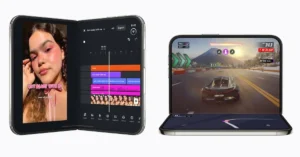
Google subsequently expanded its form factors with the release of the Pixel Fold and the Pixel Tablet. The Pixel Fold served as the company’s entrance into flexible displays, sporting a wider outer screen profile, while the Pixel Tablet offered a hybrid home experience using a companion charging speaker dock.
With the Pixel 8 and Pixel 8 Pro, Google introduced Tensor G3 processors, brighter Actua panels, a flat screen profile on the Pro edition, and an industry-leading commitment to seven years of operating system updates. The Pixel 8a shortly followed, bringing those extended software guarantees to a mid-range bracket and blurring traditional distinctions between entry and flagship tiers.
The Pixel 9 series expanded the lineup even further by introducing three standard flagship sizes—the Pixel 9, Pixel 9 Pro, and Pixel 9 Pro XL—alongside the refined Pixel 9 Pro Fold. This generation showcased flattened sides, updated Tensor G4 silicon, and satellite connectivity. Subsequent iterations in the years following the Pixel 9 release maintained a consistent design while concentrating primarily on internal hardware efficiency and processing performance, ultimately carrying the hardware family to the Pixel 11 series and marking a complete decade of Made by Google devices.