


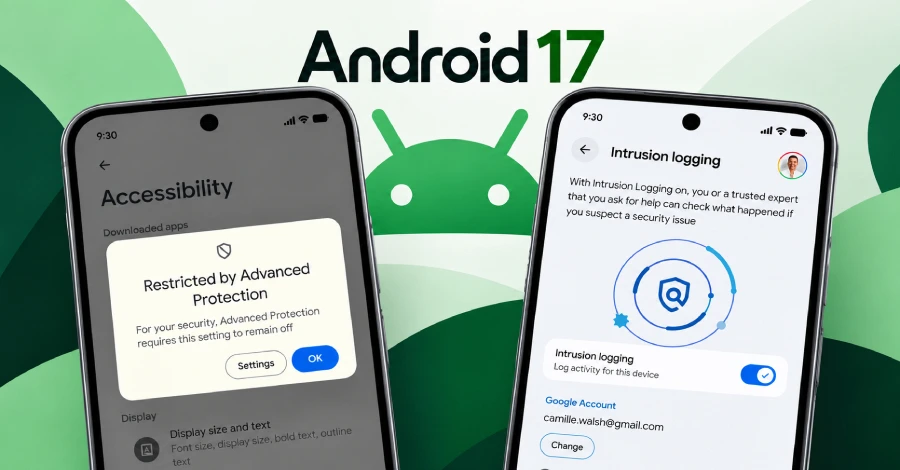
Google has announced an upcoming security enhancement in Android 17 designed to curb the widespread abuse of mobile accessibility features by malicious software. Under the new policy, enabling Android’s Advanced Protection mode will automatically restrict access to the operating system’s AccessibilityService framework exclusively to verified applications officially classified as Accessibility Tools.
The move addresses a persistent and dangerous vector in mobile threat landscapes. The AccessibilityService application programming interface was engineered to provide vital assistance to individuals with disabilities, powering utilities such as screen readers, voice controls, and automated interaction systems. To perform these functions, the API requires high-level privileges that allow an application to operate in the background, intercept user interface interactions, monitor screen contents, and execute actions across other software on the user’s behalf.
The Threat of Accessibility Exploitation
Because of its extensive permissions, the accessibility framework has become one of the primary conduits exploited by banking trojans, spyware, and fraudulent software campaigns. Historically, attackers have relied on social engineering schemes to convince smartphone users to manually turn on accessibility privileges for an ostensibly benign application. Once granted, malicious software can execute high-impact operations without ever needing to gain root access to the device.
As Google explained regarding the inherent security risks, because accessibility services are architected to interface directly with screen elements, threat actors can weaponize them to read sensitive information, distribute and install malware, or systematically block victims from uninstalling the hostile app. In banking fraud scenarios, rogue apps routinely abuse the interface to log keystrokes, overlay fraudulent authentication screens on top of legitimate financial apps, silently grant themselves further operating permissions, and initiate unauthorized monetary transfers.
Targeted Restrictions in Android 17
To eliminate these attack pathways without disrupting legitimate accessibility requirements, Google is tying stricter software verification directly to its Advanced Protection feature. Advanced Protection serves as an opt-in configuration within Android that engages maximum defensive controls to guard endpoints against sophisticated digital threats.
Google confirmed that in Android 17, turning on Advanced Protection will strictly bar unverified apps from utilizing the AccessibilityService API. The company noted that this automated restriction closes off a major avenue of attack while maintaining access for genuine assistive technologies.
Developer Notifications and Intrusion Logging
Alongside the constraints placed on accessibility abuse, Android 17 introduces additional safeguards and forensic utilities for targeted users. The platform will support notifications for software developers when Advanced Protection is active on a device, permitting apps to automatically engage specialized safeguards or tailor their security posture for high-risk users.
Devices that already have Advanced Protection enabled will receive an alert once these updated capabilities are deployed. Furthermore, Google highlighted a new forensic feature called Intrusion Logging, which users can configure manually by visiting their Advanced Protection settings menu to enhance threat detection and analysis capabilities on their devices.