


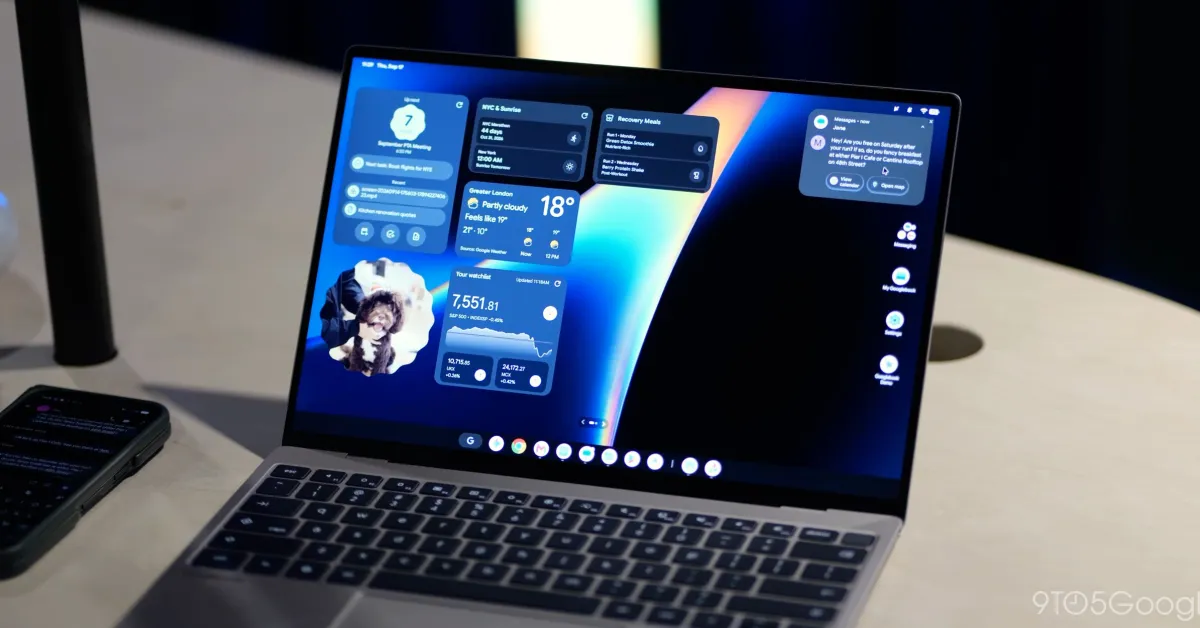
Google has officially introduced the Googlebook, a laptop built entirely on top of Android designed to bridge the gap between smartphones and traditional personal computers. The device is marketed around seamless cross-device functionality, promising to deliver a deeply integrated experience for mobile users. However, early adopters holding Samsung smartphones will find themselves unable to access the platform’s signature ecosystem tools on day one.
Missing Features for Samsung Users
The core selling point of the Googlebook relies on its suite of ‘Better Together’ continuity features. These tools allow the laptop to connect directly with an Android handset to share mobile data via an instant hotspot, sync notifications across displays, and provide immediate access to files stored on the phone. The platform is also engineered to let users stream apps directly from a phone’s screen to the laptop and seamlessly resume active tasks across both devices.
Despite that pitch, Google’s official support documentation indicates that Samsung smartphones are unsupported at launch. While the Googlebook is intended to serve as the ideal companion for the broader Android ecosystem, Samsung accounts for a substantial share of global Android hardware. Google has stated that support across compatible Samsung devices will instead roll out over the coming weeks, apologizing for the inconvenience caused by the delay.
Operating System Requirements and Uncertainty
The support gap is further compounded by strict baseline software requirements. Google has confirmed that the Googlebook’s suite of Android integrations will not operate with any device running Android 16 or earlier. To utilize any cross-device features, a handset must be upgraded to Android 17 at minimum.
When compatibility for Samsung devices does arrive, it will be limited to Samsung hardware running Android 17. The documentation does not specify the precise technical reason for the delay, leaving it unclear whether the necessary software patches must be deployed directly by Google, issued as firmware updates by Samsung, or resolved through joint service updates.
Additional Launch Obstacles
The postponement of Samsung integration is not the only obstacle confronting the Googlebook at release. The platform is dealing with other day-one limitations, including an absence of support for the Slack web app, a widely used collaboration platform for enterprise and workplace productivity. Additionally, the operating system faces apparent performance optimization challenges when running applications on Intel-based hardware configurations.
For consumers evaluating the Googlebook primarily as an extension of their mobile workflow, the initial absence of support for Samsung devices and older operating system versions represents a significant caveat during the laptop’s early rollout.
About The Author