


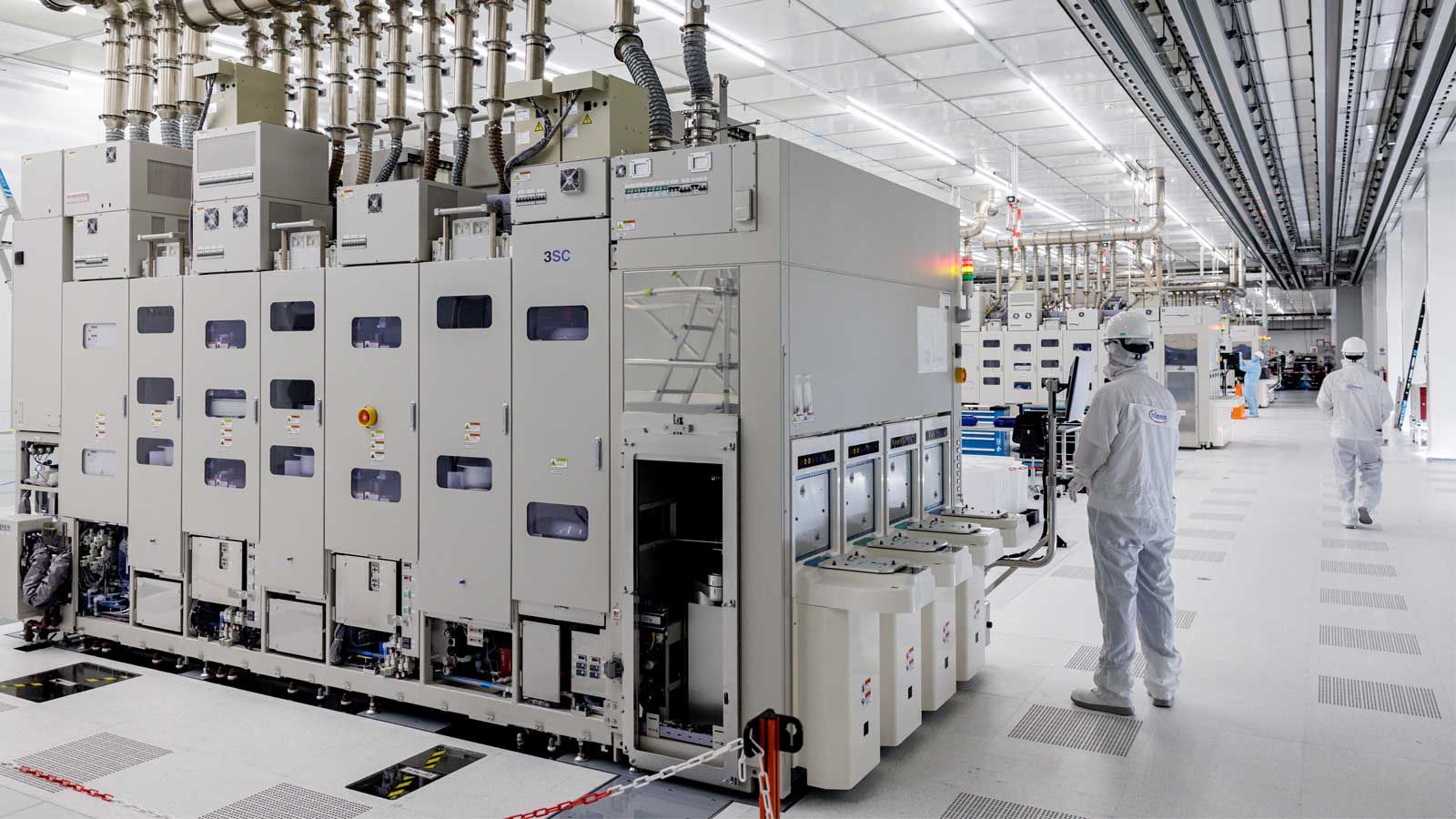
Japanese semiconductor lithography equipment manufacturer Gigaphoton has introduced a new neon gas recycling platform designated hTGM, built specifically for argon fluoride excimer laser systems. According to company data reported by Business Wire, the recycling method demonstrates a 50 percent gas recovery rate, with projections that fine-tuning system configurations could yield higher recovery figures. The development offers semiconductor fabrication facilities a new tool to mitigate ongoing vulnerabilities within the critical materials supply chain.
Gigaphoton previously implemented neon recycling technologies on its krypton fluoride laser systems, and the introduction of the hTGM solution expands those capabilities to argon fluoride lasers. The equipment maker estimates that deploying a single hTGM unit on an argon fluoride setup can reduce annual neon gas consumption by as much as 470 kiloliters. For chip manufacturers, this presents substantial operating material savings alongside diminished exposure to international supply chain disruptions.
The Geopolitical Squeeze on Noble Gas Supplies
Neon is a noble gas that remains inert under standard operating conditions, making it safe and stable to process. However, because it vaporizes readily and does not easily form chemical bonds, it exists in low concentrations within Earth’s atmosphere. The most viable commercial method for obtaining neon is through the fractional distillation of super-cooled air, meaning it is most affordably collected as an industrial byproduct. For decades, massive air-separation units operated at steel facilities across Ukraine extracted crude neon, which was subsequently purified and exported by two domestic companies. Prior to 2022, Ukraine supplied approximately 50 percent of the neon used by the global semiconductor manufacturing sector.
Following Russia’s full-scale invasion of Ukraine in 2022, Ukrainian refiners were forced to halt production and exports, prompting immediate shortages and price concerns. The semiconductor industry accounts for an estimated 70 percent of total worldwide neon production, where it plays an indispensable role in deep ultraviolet lithography processes. In contrast, advanced extreme ultraviolet lithography equipment relies on tin-plasma lasers and does not consume neon.
Regional Diversification and In-Fab Recycling
In response to the 2022 supply shock, major chipmaking economies initiated domestic supply projects alongside in-fab recovery systems. In South Korea, authorities moved quickly to support domestic neon extraction while backing a national recycling framework centered on direct recovery within semiconductor fabrication plants. Taiwan took steps to install dedicated purification equipment within existing blast-furnace air-separation units, pursuing a pathway to reach complete domestic self-sufficiency in neon within several years.
China embedded neon purification infrastructure across its broad industrial base, integrating extraction with domestic steelmaking and petrochemical complexes. In the United States, new air-separation units were planned across Gulf Coast petrochemical centers, though those facilities are not anticipated to meaningfully bolster domestic supplies until near the conclusion of the decade.
Industry Progress and Competitive Recovery Benchmarks
For semiconductor manufacturers seeking immediate buffers against raw material shortages, closed-loop recycling has become a critical objective. Laser maker Cymer qualified the first commercial neon recovery systems for argon fluoride excimer lasers late in 2023, building on its earlier demonstrations of 50 percent recovery efficiency achieved in 2015. On the fabrication side, South Korean memory producers Samsung and SK Hynix became the first major memory fabricators to deploy neon recycling within production lines in 2024.
While Gigaphoton’s claimed 50 percent recovery rate marks an important baseline for its customer base, it reflects existing benchmarks rather than an industry maximum. Internal testing conducted by Gigaphoton in 2017 suggested that argon fluoride recovery rates could theoretically surpass 90 percent. Other equipment developers are already achieving higher marks. At the SemiCon Taiwan conference in early September, Japanese environmental equipment supplier Kanken Techno demonstrated an excimer laser neon recycling system capable of exceeding a 90 percent recovery efficiency. Kanken Techno operates alongside both primary argon fluoride laser suppliers and is currently pursuing formal tool certification, with approvals anticipated in the near future.
Long-Term Transition Away from Neon
The maturation of recycling technologies suggests that the neon supply shortages that emerged in 2022 may ultimately represent a solvable, temporary crisis. In the longer term, the semiconductor industry may see its overall neon consumption decline as manufacturing methodologies shift toward alternative patterning technologies.
Extreme ultraviolet lithography already avoids noble gas excimers entirely, allowing modern, complex chip designs to bypass neon dependencies as production nodes transition. Additionally, researchers are exploring alternative techniques to generate deep ultraviolet light without toxic or noble gases. Solid-state laser systems have shown progress, although iterations tested in China last year remained short of industrial power requirements. Another emerging approach, nanoimprint lithography, presents potential operational cost reductions of 90 percent compared to traditional processes. While nanoimprint and solid-state alternatives still face substantial technical, qualification, and fabrication integration barriers, the confluence of laser gas recovery and alternative lithography architectures is set to lessen the chip industry’s reliance on global neon extraction.
About The Author