


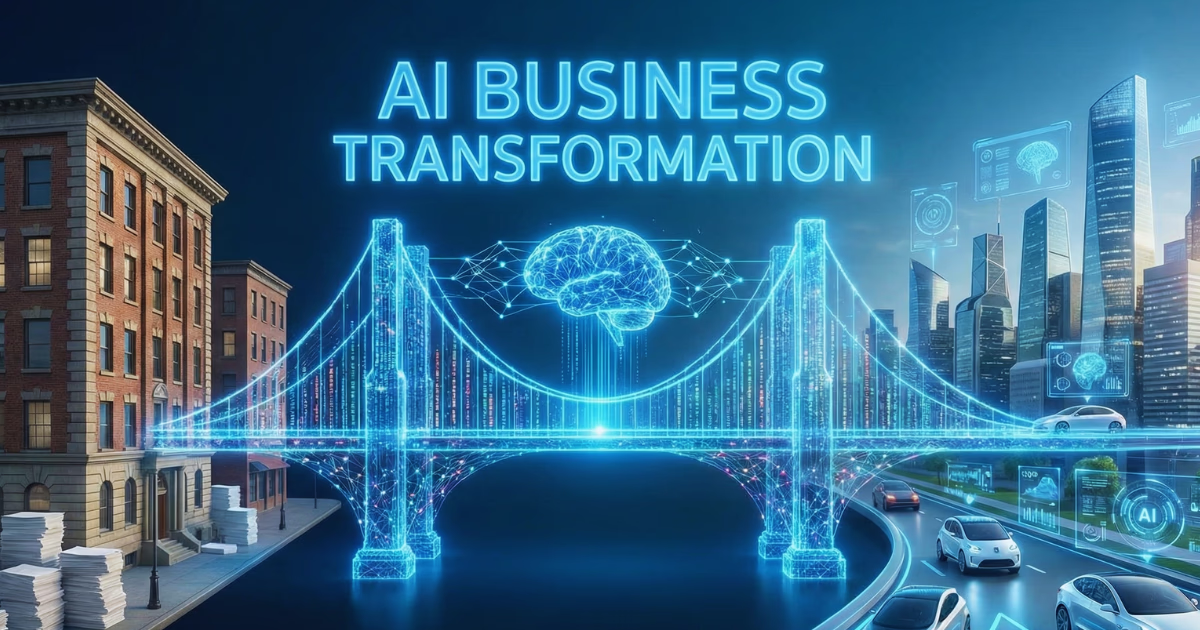
Artificial intelligence (AI) is no longer a technology reserved for large corporations with massive budgets and dedicated research teams. Across the world, small businesses are increasingly using AI to automate routine work, improve customer experiences, strengthen marketing, analyze data, and compete more effectively with larger companies.
What makes this transformation particularly significant is the accessibility of modern AI tools. A small company with a handful of employees can now access capabilities that previously required expensive software, specialist employees, and significant infrastructure. Recent research shows just how quickly this shift is happening. Goldman Sachs reported in March 2026 that 76% of surveyed small businesses were using AI, while 93% of those users said AI had produced a positive impact on their business.
AI Is Becoming a Business Tool, Not Just a Technology
For many small businesses, AI adoption does not begin with building a sophisticated artificial intelligence system. It often starts with simple tools that help employees complete everyday tasks faster.
Businesses are using AI to write emails, create marketing content, summarize documents, generate images, analyze information, answer customer questions, prepare reports, and assist with administrative work.
The Federal Reserve Bank of San Francisco found that small businesses were using or planning to use AI for a wide range of activities, including productivity, marketing, social media, SEO, communications, graphic design, customer service, analytics, forecasting, and programming.
This matters because small businesses typically operate with limited staff. When one employee has to handle multiple responsibilities, saving even a few hours each week can have a meaningful financial impact.
Automation Is Helping Small Teams Do More
One of AI’s biggest advantages for small businesses is automation.
Consider a small online retailer. Instead of manually responding to every basic customer question, AI-powered systems can handle frequently asked questions, provide product information, assist with order inquiries, and route complicated issues to a human employee.
Similarly, an accounting firm can use AI to organize documents and extract information, while a marketing agency can use AI to generate initial content ideas, analyze campaigns, and prepare reports.
The objective is not necessarily to replace employees. In fact, research increasingly suggests that small businesses are using AI primarily as a productivity tool.
The U.S. Chamber of Commerce Foundation reported in June 2026 that half of small-business workers surveyed were already using AI at work, with most using it to increase productivity rather than eliminate jobs.
That distinction is important. AI can take care of repetitive tasks while employees concentrate on activities requiring judgment, creativity, communication, and relationship-building.
Marketing Has Become More Accessible
Marketing is another area where AI is changing the competitive landscape.
Previously, a small business competing against a large brand might have struggled to produce enough content for social media, email campaigns, websites, advertisements, and search engines.
AI can now help small teams generate content ideas, write initial drafts, create advertising variations, analyze customer responses, and personalize marketing messages.
For a local restaurant, AI might help create social media campaigns around seasonal offers. For a travel company, it can assist with destination descriptions, promotional emails, itinerary ideas, and customer communications. For an online store, AI can help create product descriptions and marketing copy at scale.
This does not eliminate the need for human creativity. Instead, it gives small businesses more capacity to execute their ideas.
Better Customer Service Around the Clock
Customer expectations have changed dramatically in the digital economy. People increasingly expect businesses to respond quickly, regardless of the time of day.
AI-powered chatbots and virtual assistants can help small businesses provide immediate responses to common questions. They can explain services, provide basic information, collect customer details, and direct customers toward the appropriate human representative.
This can be particularly valuable for businesses that cannot afford a large customer-support team.
However, successful businesses understand that automation should not remove the human element entirely. Complex complaints, sensitive conversations, negotiations, and high-value customer relationships still require people.
AI works best when it handles routine interactions while employees focus on situations where human judgment matters most.
Data Is Becoming More Useful
Small businesses generate enormous amounts of information through sales, websites, social media, customer interactions, and financial transactions. The challenge has traditionally been turning that information into useful insights.
AI can help identify patterns that might otherwise be difficult to recognize.
For example, an online retailer could analyze purchasing behavior to identify popular products. A restaurant could examine sales patterns to determine which menu items perform best at particular times. A marketing company could analyze campaign performance and identify which audiences are most responsive.
AI-powered forecasting can also support inventory management, sales planning, and resource allocation.
As these capabilities become easier to access, sophisticated data analysis is no longer limited exclusively to large enterprises.
AI Is Helping Small Businesses Compete Globally
Perhaps the most important transformation is the reduction of barriers to competition.
A small business in Pakistan, India, Kenya, Brazil, or another emerging market can use many of the same AI-powered productivity tools available to companies in the United States or Europe.
This creates opportunities for entrepreneurs to operate internationally with smaller teams.
A freelance designer can communicate with international clients more efficiently. A software company can accelerate development. A travel agency can create multilingual content. An e-commerce business can improve product descriptions and customer communication for different markets.
The global nature of AI means that geographic location is becoming less important for certain digital business activities.
The Biggest Challenge: Using AI Correctly
Despite its advantages, AI is not a magic solution.
Small businesses face several barriers to effective adoption, including cost, lack of technical expertise, training requirements, data privacy concerns, and uncertainty about which tools to choose.
Goldman Sachs found that only 14% of surveyed small businesses had fully integrated AI into their core operations, despite widespread use. The survey also found that 73% wanted additional training and resources to implement AI successfully.
This highlights an important lesson: buying an AI subscription is not the same as implementing an AI strategy.
Businesses need to identify specific problems AI can solve, establish appropriate processes, train employees, and evaluate whether the technology is actually producing measurable results.
AI Should Augment People, Not Remove the Human Element
The most successful small businesses are likely to view AI as a partner rather than a replacement for people.
AI is extremely effective at processing information, generating drafts, recognizing patterns, and performing repetitive tasks. Humans remain essential for leadership, empathy, creativity, strategic decisions, ethics, and relationships.
Goldman Sachs reported that 87% of surveyed small businesses viewed AI as augmenting rather than replacing employees.
This human-AI combination could become one of the defining characteristics of the modern small business.
The Future of Small Business Is AI-Assisted
AI adoption among small businesses is accelerating, although the pace varies by industry, company size, and region. Research from JPMorganChase found that newer businesses are adopting AI particularly quickly, with companies founded in 2025 reaching a 10% adoption rate within six months, compared with more than six years for businesses founded in 2019.
The future will likely involve AI becoming embedded into everyday business software rather than existing as a separate technology.
Accounting platforms, customer relationship systems, marketing tools, project-management software, e-commerce platforms, and communication applications are increasingly incorporating AI capabilities.
For entrepreneurs, the question is therefore changing from “Should my business use AI?” to “Where can AI create the greatest value for my business?”
Conclusion
Artificial intelligence is transforming small businesses by giving small teams access to powerful capabilities once associated primarily with large corporations.
From automation and marketing to customer service, data analysis, content creation, and global expansion, AI can help entrepreneurs save time and operate more efficiently.
But the businesses that benefit most will not necessarily be those that use the largest number of AI tools. They will be the businesses that identify meaningful problems, implement the right solutions, train their people, protect customer data, and maintain human oversight.
AI is not simply changing the technology businesses use. It is changing what a small team can accomplish.
For entrepreneurs around the world, that may be the most important opportunity of all.