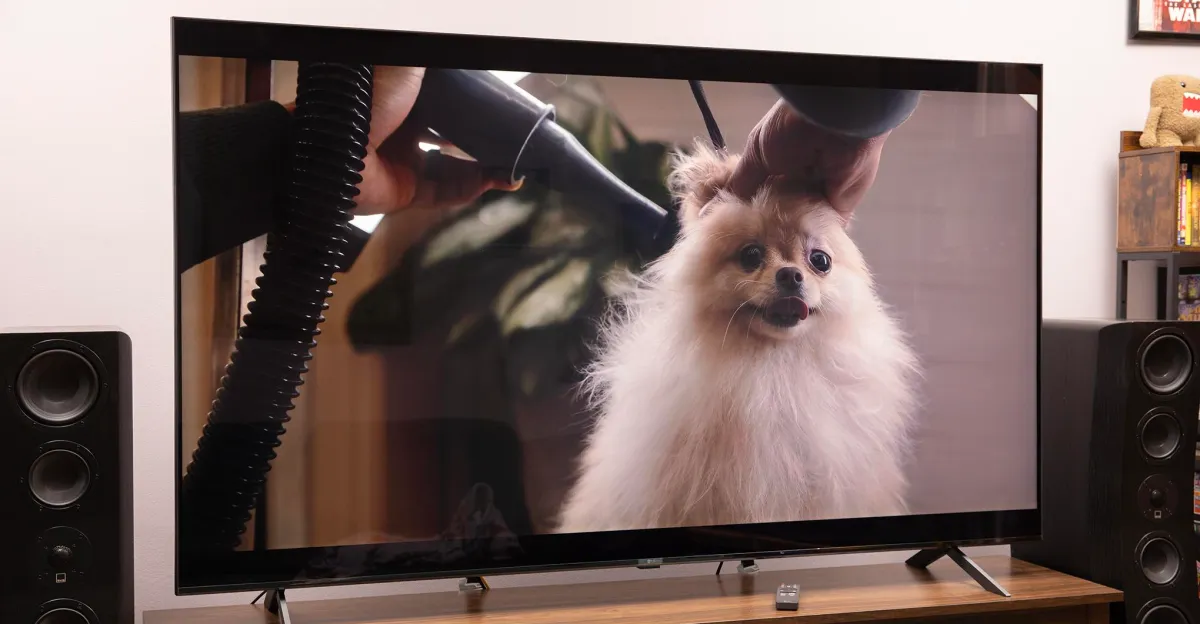
Long recognized as a primary manufacturing force in the television market through its dominant OLED lineup, LG has expanded its high-end display portfolio with the release of the Micro RGB evo MRGB95B. The entry comes during an industry-wide transition in 2026, where major television makers are fielding consumer models that swap traditional backlighting architectures for direct red, green, and blue light-emitting diode arrays. Retailing at $3,600 for the 75-inch configuration, the MRGB95B serves as the entry-level screen size in a lineup that spans three distinct panel options.
Understanding Micro RGB Backlight Technology
The core proposition of RGB LED technology rests in how color and luminance are produced across the display panel. Traditional LED televisions typically rely on a broad field of blue or white light-emitting diodes directed through quantum dots or color filters to generate visible hues. In contrast, RGB LED displays integrate separate zones composed of individual red, green, and blue diodes directly within the backlight. Although a color filter remains part of the panel assembly, the backlight itself pre-mixes light output corresponding to the incoming video signal, lowering the workload on the front filters and enabling substantially higher color saturation and peak brightness.
LG and Samsung have adopted the proprietary term Micro RGB to categorize their implementation, distinguishing their engineering from competing sets labeled Mini RGB LED. Industry reporting suggests that the individual diodes utilized by LG and Samsung are physically smaller, though neither firm has officially verified the precise physical dimensions of the emitters. In bench evaluation, smaller individual diodes do not automatically yield a greater tally of local dimming zones or guarantee superior overall image processing when compared to Mini RGB alternatives.
Luminance and Color Gamut Measurements
Laboratory testing conducted using an array of diagnostic instruments—including Portrait Displays’ Calman calibration software, a Murideo 8K Seven signal generator, an X-rite i1 Pro 3 spectrophotometer, a C6 HDR5000 colorimeter, and a Konica Minolta LS-100 luminance meter—demonstrates extreme brightness capabilities from the panel. Evaluated straight out of the box in HDR Filmmaker mode without custom technical calibration, the MRGB95B achieved a peak luminance reading of 4,011 nits. This output allows HDR spectral highlights, such as those seen in action sequences from films like The Meg, to deliver intense visual punch while easily cutting through ambient daylight in heavily sunlit rooms.
Color volume coverage is similarly wide. The television captures 100 percent of the commercial DCI-P3 color gamut standard used in modern cinema mastering, along with nearly 90 percent of the wider BT.2020 color space. However, chromatic precision out of the box exhibits noticeable variance. Even under the calibrated parameters of default Filmmaker mode, the panel demonstrates a persistent push toward light blue tones. As a consequence, neutral white objects, including cloud formations, present with a light cyan cast, while human skin tones register cooler than standard reference benchmarks dictate.
Black Levels, Blooming, and Reflectivity
At the opposite end of the contrast spectrum, the MRGB95B encounters performance limits. Shadow detail situated just above absolute black proves difficult to resolve; shadow textures in dimly lit scenes, such as the indoor opening environments of Sapper Morton’s home in Blade Runner 2049, become obscured. Furthermore, when high-luminance elements appear against deep black backdrops—most noticeably during the display of bright subtitles—the panel produces visible haloing and backlight blooming that exceeds the levels measured on competing RGB LED displays.
Room lighting interactions present another notable operational factor. The television incorporates a high-gloss panel coating that ranks among the most reflective on the consumer market. In dimly lit or evening viewing spaces where domestic lighting is activated, direct light from table lamps or overhead fixtures causes pronounced rainbow light diffraction patterns across the screen surface. While these reflections remain tolerable during high-average-picture-level scenes, such as bright desert vistas in Dune, they become sharply visible against dark backgrounds, including the subdued interiors of House Harkonnen.
Off-axis viewing angles reflect standard limitations common to non-OLED architectures. When viewers move moderately off-center from the display’s perpendicular axis, color saturation diminishes noticeably, leaving images washed out for spectators seated along the sides of a seating arrangement.
Hardware Connectivity, webOS, and Market Placement
In terms of hardware and gaming features, the MRGB95B is equipped with four full-bandwidth HDMI 2.1 inputs, one of which supports an enhanced Audio Return Channel (eARC). Input lag testing via a Leo Bodnar 4K lag tester pairs with support for Variable Refresh Rate (VRR), Auto Low Latency Mode (ALLM), LG Game Optimizer, and Nvidia G-Sync compatibility. On the audio protocol side, the set supports Dolby Atmos, Dolby Atmos FlexConnect, Dolby Digital, and Bluetooth Auracast. High Dynamic Range format support includes standard HDR and Dolby Vision, though it omits HDR10+ and Dolby Vision 2. The set ships with LG’s revised Magic Remote, which adopts a traditional rectangular housing over the curved wand design of earlier models.
Software operation is managed by LG’s proprietary webOS platform, which provides native access to major streaming services, though user setup requires agreeing to terms of service and privacy policies only if the smart interface is engaged. The interface operates swiftly, though navigation differs from alternatives like Google TV, Apple TV, or Roku. LG recently drew public scrutiny following an investigation by Gamers Nexus reporting continuous background audio recording and security concerns on its televisions, claims that LG has officially denied. Users who prefer not to accept the software terms can bypass the interface entirely by operating the set offline alongside dedicated external streaming hardware such as an Apple TV 4K.
At an asking price of $3,600 for the 75-inch variant, the MRGB95B enters a fiercely contested market. Competing options such as the 75-inch Sony Bravia 7 II retail for approximately $1,300 less while delivering superior out-of-the-box color precision and lower screen reflection, while the Hisense UR9 offers comparable performance at a lower cost. Additionally, internal competition from LG’s own premium OLED lineup remains formidable; the flagship LG G6 OLED, alongside Samsung’s S95H OLED, sells for only a few hundred dollars more, delivering infinite contrast, zero blooming, superior off-axis viewing, and pixel-level light emission despite lower absolute peak nit ceilings.