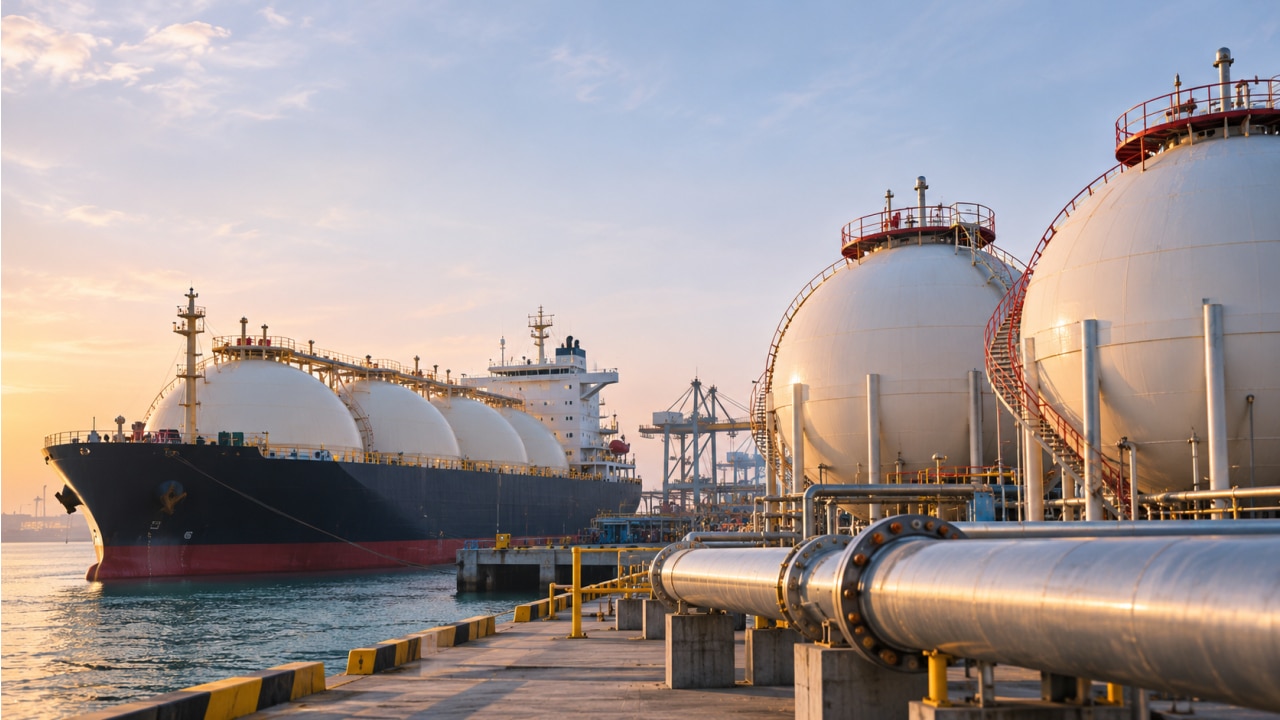
Pakistan is evaluating a comprehensive infrastructure overhaul aimed at expanding its liquefied petroleum gas (LPG) import supply chain. The plan, which has been submitted to the federal cabinet for formal approval, estimates that approximately $1 billion in capital expenditure will be required over the next three to five years to keep pace with national energy requirements through FY2035-36.
The proposal forms part of a broader restructuring of Pakistan’s LPG sector. Under the outlined framework, the investment would be channeled into building additional import terminals, dedicated storage facilities, specialized transport capacity, filling plants, and new cylinders to address long-standing distribution and handling bottlenecks across the supply chain.
Current Port and Storage Constraints
The policy summary submitted to the cabinet pinpoints several structural weaknesses in Pakistan’s existing LPG handling apparatus. At present, operations rely heavily on two terminals situated at Port Qasim. Each of these facilities operates with a storage capacity of roughly 6,500 metric tons. Furthermore, terminal infrastructure limits incoming vessels to a maximum of 10,000 deadweight tons (DWT), falling well below international shipping benchmarks that typically range between 30,000 and 50,000 DWT.
These scale constraints are compounded by a lack of refrigerated storage installations and the absence of an inter-terminal pipeline network. Without these facilities, the country remains unable to process larger bulk shipments, limiting the operational efficiencies and economies of scale normally realized in international LPG maritime trade.
Physical channel conditions further compound the issue. The existing 10-metre draft at the Sui Southern Gas Company (SSGC) LPG jetty prevents larger carriers from docking, restricting the overall volume of cargo that can be received in single shipments.
Phased Expansion and Port Qasim Modernization
To eliminate these import bottlenecks, the proposed guidelines outline the allocation of land and berthing resources at Port Qasim for a dedicated 40,000-metric-ton LPG terminal. Under the phased development plan, the initial phase would construct between 10,000 and 12,000 metric tons of on-land storage capacity positioned with access to the existing SSGC jetty.
To solve vessel size limitations over the longer term, the government plans to commission a technical feasibility study. This study will weigh two primary options: dredging the Port Qasim approach channel to accommodate carriers of approximately 25,000 DWT, or constructing an entirely new jetty equipped to handle Very Large Gas Carriers (VLGCs) alongside a refrigerated terminal facility.
Interim Supply and Procurement Mechanisms
While long-term infrastructure assets are developed, the proposal includes measures to maintain supply continuity. State-owned entities may be granted interim access to existing commercial terminals and storage infrastructure to prevent market shortages.
Additionally, the framework suggests authorizing state enterprises, including Pakistan State Oil (PSO) and SLL, to negotiate long-term supply pacts and government-to-government (G2G) agreements. This procurement approach is envisioned to operate similarly to the government-to-government arrangement maintained with Kuwait Petroleum Corporation (KPC) for high-speed diesel, providing a national import backstop.
Under the submitted guidelines, state-owned enterprises would also retain the authority to develop or contract additional handling and storage capacity independently to bolster nationwide distribution networks.