


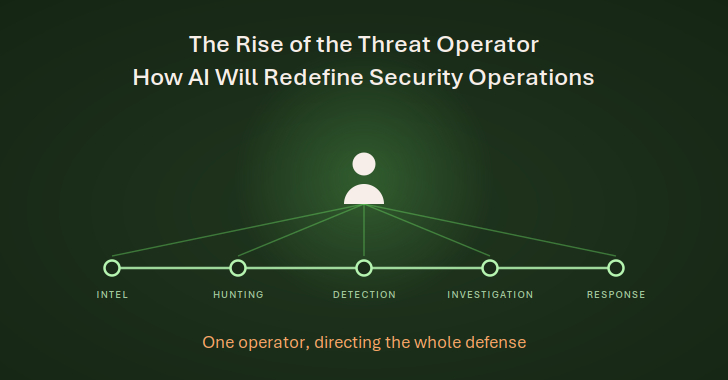
Artificial intelligence is increasingly assuming responsibilities that have historically defined the day-to-day work of security analysts. Tasks such as investigating alerts, gathering evidence, correlating data across disparate tools, and initiating response actions are progressively being handled directly by autonomous systems. As these capabilities continue to develop, security operations centers (SOCs) are encountering significant structural shifts in how labor is organized, how defensive decisions are reached, and what competencies organizations demand from their frontline cybersecurity staff.
Rather than diminishing the human role, this operational evolution presents security practitioners with an opportunity to operate across a broader defensive mandate. As automated systems shoulder repetitive workloads, analysts are transitioning from triaging isolated alerts to coordinating defense throughout the entire security lifecycle. This developing profile is recognized as the Threat Operator: an AI-native security professional tasked with translating business risk into operational priorities, guiding AI-driven actions, and exercising critical judgment over automated system decisions.
Bridging Fragmented SOC Workflows
Historically, the architecture of the modern SOC formed around isolated functional silos, each dependent on independent tooling and distinct workflows. Threat intelligence specialists tracked adversaries, detection engineers crafted behavioral rules, threat hunters scanned environments for missed activity, frontline analysts investigated initial alerts, and incident responders contained verified breaches. While these functions address interdependent stages of defense, coordination across them has frequently relied on fragmented ticketing systems, disparate toolsets, and manual handoffs.
Artificial intelligence is beginning to integrate these compartmentalized stages into unified workflows. When fresh intelligence regarding an emerging adversary emerges, AI agents can formulate a hunting hypothesis, isolate gaps in existing telemetry, and assist in generating corresponding detection logic. Once suspicious activity is detected, automated workflows can investigate the issue, enact containment procedures, and recommend lasting defensive enhancements. AI systems preserve contextual data and operational findings as activity progresses across each phase. For platforms such as Conifers.ai’s CognitiveSOC, agentic AI connects intelligence, hunting, detection engineering, and incident response while providing an underlying reasoning chain and evidence trail for human review.
Shifting from Execution to Supervision
This operational consolidation reshapes where defensive staff contribute maximum value. Rather than focusing strictly on tactical execution, Threat Operators operate across the defensive lifecycle to set parameters informed by organizational exposure, ongoing business processes, and the threat environment. They define which risks require immediate intervention, establish the explicit objectives automated defenses must achieve, calibrate operational autonomy, and decide when human intervention is mandatory.
In practical scenarios, this guidance directly balances containment with business continuity. In a financial institution facing an attack against its identity infrastructure, AI agents can assess exposure, search for compromise indicators, flag detection coverage gaps, and propose mitigation strategies. However, the Threat Operator must supply the essential organizational context: identifying which systems underpin critical business services, determining acceptable operational risk, and verifying which actions require formal administrative authorization.
This dynamic marks a structural migration from human-in-the-loop workflows to human-on-the-loop governance. Security specialists increasingly supervise and manage autonomous pipelines rather than executing every procedural step manually. The level of autonomy granted to autonomous agents varies based on technical maturity, organizational risk appetite, and the operational impact of specific interventions, while absolute accountability remains with human practitioners. This requirement for defined oversight and responsibility aligns with governance principles outlined in the NIST AI Risk Management Framework.
Rebuilding the Analyst Apprenticeship
The automation of repetitive tasks introduces profound changes for early-career cybersecurity professionals. Historically, the SOC served as the primary entry point into the cybersecurity industry. Junior analysts acquired foundational skills through the continuous execution of alert triage, evidence collection, documentation, and escalation. While repetitive, this routine functioned as a practical apprenticeship, teaching analysts how systems behave under normal conditions, how attackers manipulate environments, and how senior investigators differentiate between benign anomalies and active threats.
As AI platforms absorb these foundational activities, the conventional path of advancing from basic alert handling to sophisticated investigations requires fundamental reassessment. Without intentional training frameworks, security organizations face the risk of eroding the talent pipeline needed to produce future senior practitioners. Conversely, AI environments can offer an alternate development track if managed deliberately. Junior Threat Operators can receive structured, supervised exposure across multiple defensive domains earlier in their careers—observing how intelligence informs proactive threat hunting, how detection logic is refined, and how containment actions influence broader business operations.
Realizing this potential requires sustained investment in core technical disciplines alongside mentorship. Operators must maintain deep competencies in networking, operating systems, attacker methodologies, query languages, detection logic, and underlying endpoint telemetry. In addition to technical fundamentals, practitioners must master orchestration, policy governance, and the ability to critically audit AI hypotheses, challenge assumptions, identify missing contextual data, and exercise judgment amid incomplete evidence.
Establishing Outcome-Focused Career Ladders
The progression of the Threat Operator role is anticipated to evolve into a structured career framework centered on defensive outcomes rather than tool manipulation. Early-career practitioners focus primarily on validating machine-generated evidence, reviewing automated findings, injecting environmental context, and understanding systemic dependencies across the lifecycle. As their capabilities advance, mid-level operators assume responsibility for translating complex business risks into actionable agent directives, addressing telemetry blind spots, and orchestrating multi-stage defensive responses.
Senior Threat Operators govern overall operational reliability. They define the boundaries of system autonomy, oversee consequential or high-impact actions, assess whether AI-driven decisions align with policy, and measure whether security operations measurably minimize risk exposure. Candidates are expected to transition into the Threat Operator path from diverse security domains, including threat hunting, digital forensics, detection engineering, security architecture, and risk management.
Adapting to this model requires leadership to establish robust governance models, evaluation standards, and clear escalation protocols. Organizational performance tracking will increasingly prioritize metrics such as the quality of defensive determinations, reduction of detection gaps, and systematic coverage expansion alongside traditional operational metrics. While adoption timelines will differ across industries, the transition emphasizes that future security centers will prioritize training personnel to govern defensive outcomes rather than simply operating disconnected security software.