Investor momentum around conversational voice technology continues to accelerate, with billions of dollars directed into startups developing foundational voice models, enterprise contact centers, meeting transcription services, and automated dictation platforms. Yet despite frequent product launches boasting human-like interaction capabilities, industry leaders argue that the sector has not yet experienced its defining breakthrough akin to the emergence of ChatGPT.
The Hurdles Facing Real-Time Interaction
The development of full-duplex systems represents a notable architectural milestone, enabling software to speak and listen simultaneously. However, operational hurdles remain significant when applying these architectures to fluid, human dialogue.
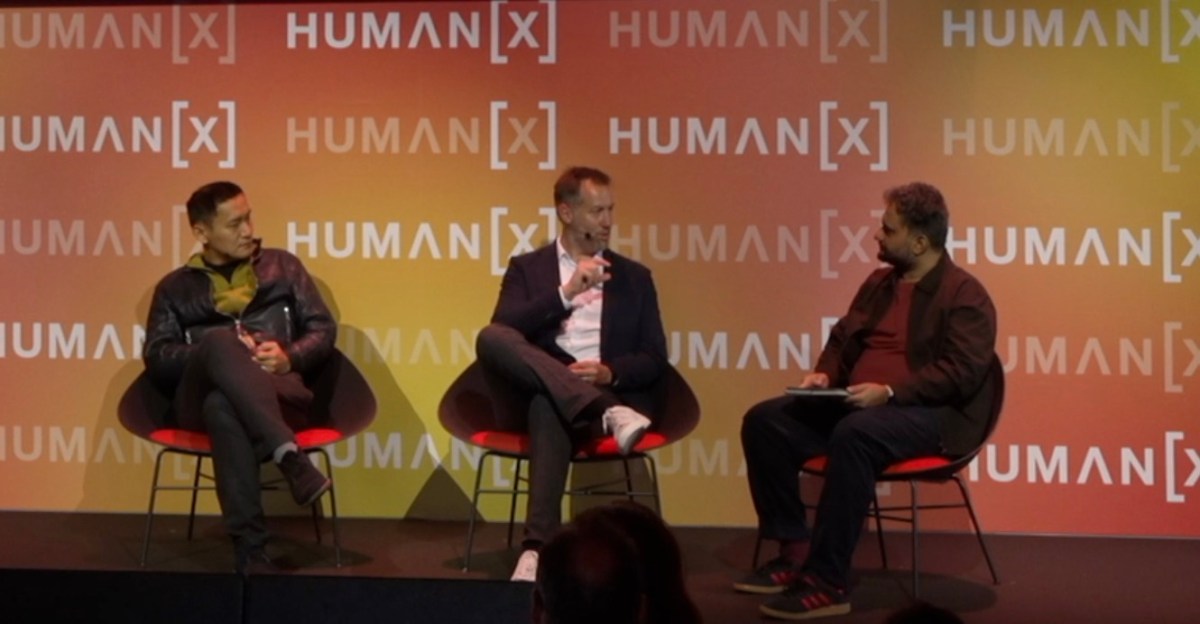
Speaking on stage at the HumanX conference, Shawn Wen, chief technology officer at enterprise voice platform PolyAI, noted that technical capabilities still lag behind widespread expectations. While full-duplex systems can handle overlapping speech, Wen highlighted that the critical hurdle is accelerating underlying reasoning capabilities. According to Wen, models must be capable of retrieving answers rapidly enough to keep pacing natural and prevent awkward pauses that disrupt the conversational flow.
For enterprise customer support, this speed and tone directly influence customer adoption. Wen explained that automated customer service representatives must avoid robotic cadences and provide immediate competence to reassure callers. If an automated agent performs effectively across the initial two or three conversational turns, users begin to gain confidence in the system. Over time, that consistency can convince consumers that human escalation is unnecessary if the software reliably resolves their inquiries.
Transcription Accuracy and Downstream Flaws
Beyond latency and reasoning, core transcription capabilities remain a persistent vulnerability across the voice technology landscape. When automatic speech recognition models fail to register critical keywords, the context layer breaks down, producing incorrect summaries or faulty automated workflows.
Alex Gay, chief marketing officer at automated meeting notes platform Otter, emphasized that automatic speech recognition accuracy directly governs the viability of subsequent automated tasks. For Otter, transcription serves as a foundation for broader productivity gains rather than a final product. Gay warned that if the baseline transcription lacks precision, every automated action derived from that text becomes flawed, creating substantial downstream impacts that quickly erode user confidence in the underlying platform.
Gay added that language handling remains an area where voice systems require continued technical iteration. Ensuring that tools accurately capture intent, recognize distinct speakers, and connect discussions to organizational knowledge bases represents an essential prerequisite for deploying deeper workplace automation.
Expressive Avatars and Meeting Dynamics
As voice platforms explore advanced applications, such as digital twins capable of standing in for human participants during workplace meetings, the requirements expand beyond basic comprehension into emotional cadence.
Gay pointed out that valuable business meetings hinge on relationship-building, debate, and strategic exchange rather than simple question-and-answer interactions. To support effective digital avatars, voice generation must convey the emotive expressions and nuances inherent to human speech. Without those emotional characteristics, Gay observed, an avatar functions as little more than a standard question-and-answer chatbot, limiting its utility in collaborative settings.
User Transparency and System Disclosure
Alongside technical reliability, voice AI providers face growing demands for procedural transparency regarding automated listening and participation. When organizations implement automated voice tools, clear disclosure remains vital to ensure participants understand when software is recording or communicating with them.
Wen stressed that in enterprise environments, companies must clearly establish that customers are speaking with an artificial intelligence system rather than a human representative. Similarly, Otter is addressing meeting trust through communication protocols, such as exploring notifications in chat channels to alert all participants that a session is being recorded, even when an automated bot is not visibly present in the participant roster.