Federal Court Clears Path for Clean Air Act Case
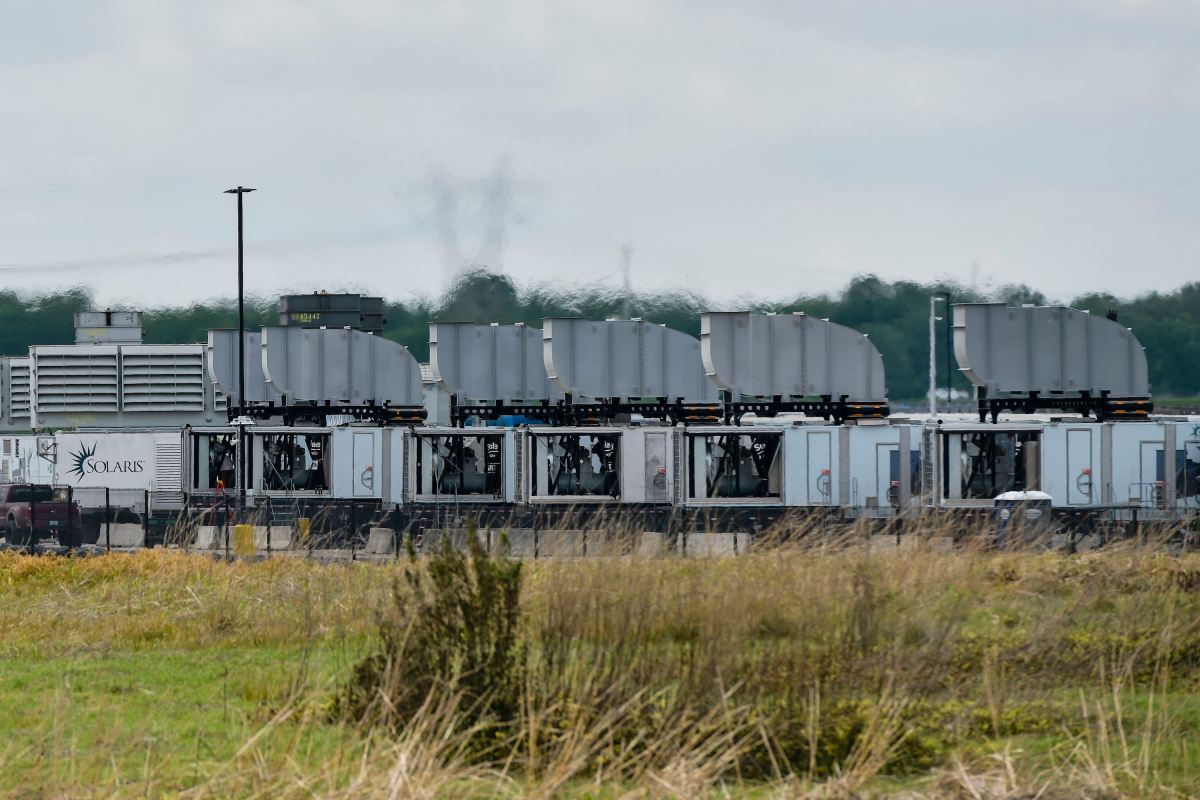
A federal judge has denied a motion by artificial intelligence company xAI seeking to dismiss a lawsuit brought by the NAACP over alleged environmental violations at its Colossus data center outside Memphis. The legal challenge accuses the SpaceX-owned enterprise of operating dozens of gas-powered combustion turbines without obtaining the permits required by federal environmental law.
The Southern Environmental Law Center filed the lawsuit on behalf of the NAACP, contending that xAI installed and operated at least 35 combustion turbines alongside other air pollution sources at the Colossus site. According to the complaint, the company moved forward with the operation without securing the mandatory preconstruction or operating air permits dictated by the Clean Air Act.
Court Rebuffs Mobile Exemption and Constitutional Arguments
In its bid to have the case thrown out, xAI argued that the gas turbines should be exempt from standard permitting requirements because the units are mobile. The company further contested the proceedings on constitutional and procedural grounds, asserting that the plaintiffs lacked standing to sue and claiming that citizen-led lawsuits violate Article II of the United States Constitution and the private nondelegation doctrine.
U.S. District Judge Debra M. Brown rejected each of the company’s defense arguments in her decision. Judge Brown ruled that the plaintiffs possess statutory standing under the Clean Air Act and concluded that the combustion turbines in question do not meet the definition of mobile sources under Mississippi’s State Implementation Plan.
Addressing xAI’s constitutional challenge regarding executive power and citizen enforcement, Judge Brown emphasized that citizen suits are a lawful mechanism for impacted groups. Because citizen suit plaintiffs sue on their own behalf, in their own name, and seek penalties that redress harm to themselves, they are not exercising the federal government’s executive power, Judge Brown wrote in the decision.
Environmental Advocates Welcome Ruling
The ruling represents the latest procedural hurdle cleared by the plaintiffs in their efforts to regulate emissions from the Colossus facility. Earlier in the month, a similar motion to dismiss the lawsuit brought by the Department of Justice was also denied by the court.
Abre Connor, the NAACP’s director of environmental and climate justice, characterized the court’s decision as another significant milestone in enforcing regulatory compliance. Connor noted that the courts have repeatedly rejected attempts by both xAI and the Department of Justice to dismiss the Clean Air Act complaint, affirming the legal standing of communities seeking accountability over industrial air pollution. Connor reiterated the organization’s position that xAI cannot operate gas turbines without securing the legally mandated permits.
Escalating Scrutiny Over Data Center Footprints
The decision comes amid a broader wave of public and regulatory scrutiny directed at the rapid development of large-scale infrastructure required for artificial intelligence workloads. Concerns over power generation, electrical grid stability, and local emissions have spurred pushback across several regions.
In response to expanding energy and environmental pressures, New York recently enacted a moratorium on new data centers, while multiple state and local governing bodies are evaluating comparable restrictions. Community concerns have also prompted major cloud and tech infrastructure providers, including Amazon and Microsoft, to pledge an end to nondisclosure agreements when negotiating facilities with local government entities. With mounting citizen and regulatory attention, the operational and environmental impact of data centers has increasingly emerged as an active issue heading into upcoming elections.