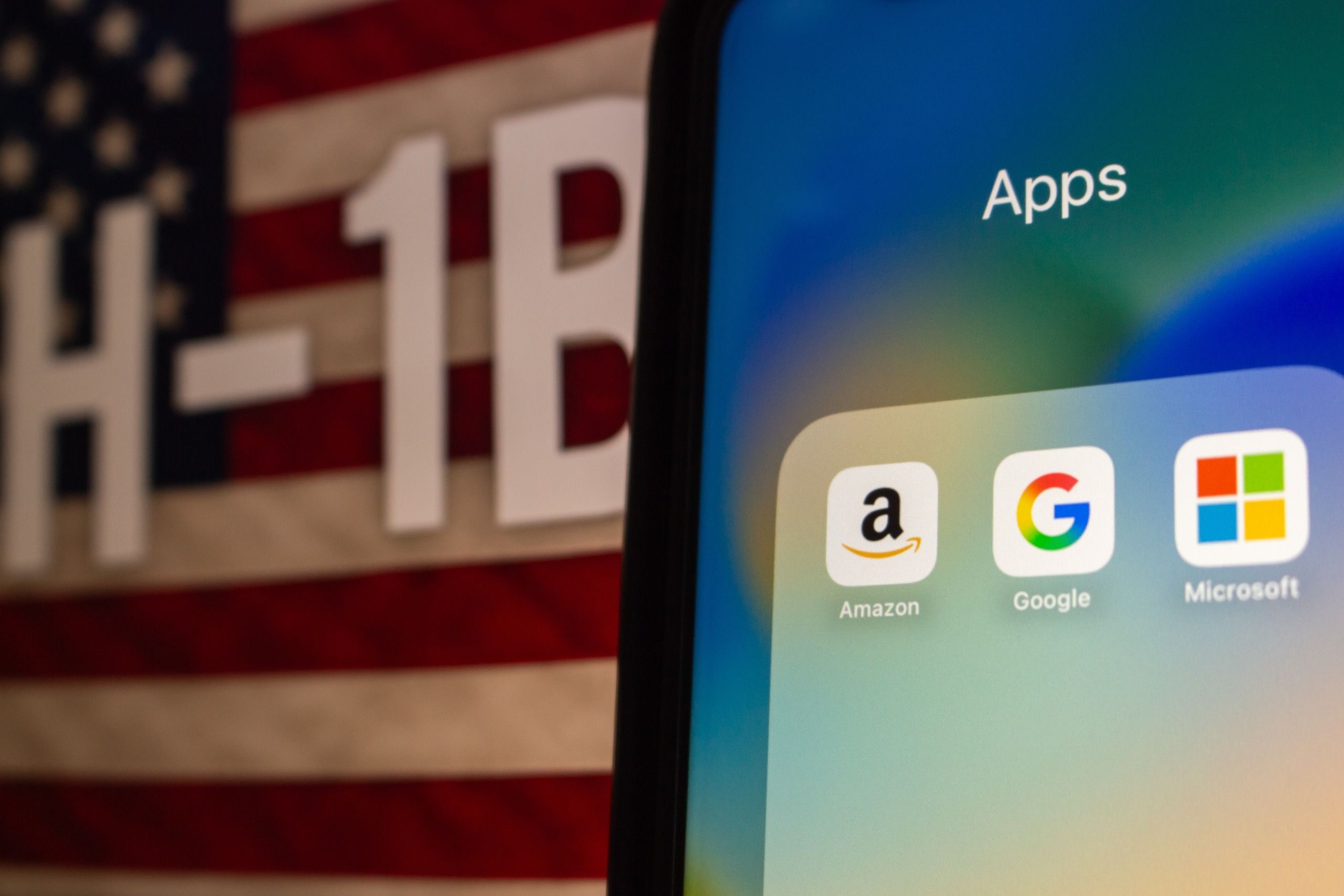
The Trump administration has barred Microsoft, Adobe, and several prominent information technology outsourcing companies from participating in the permanent labor certification program, a crucial pathway used by skilled foreign personnel to obtain green cards. Federal officials indicated the restrictions are intended to prevent fraud and protect domestic employment opportunities.
Federal Freeze on Labor Certification Filings
The restriction centers on the permanent labor certification (PERM) system, which mandates that employers demonstrate hiring a foreign worker will not negatively affect the employment opportunities or wages of American workers. The Department of Labor confirmed that processing has been stopped for the targeted entities.
“We will not accept any new or process any pending permanent labor certification applications involving these companies,” said Labor Secretary Keith Sonderling.
Alongside Microsoft and Adobe, the suspension impacts prominent IT services and consulting providers, including Cognizant, Infosys, Tata Consultancy Services, Wipro, HCL Technologies, and Capgemini. Sonderling stated that these firms had collectively submitted applications for nearly three million workers, securing approval for more than 230,000 H-1B temporary visas and acquiring over 100,000 permanent labor certifications.
Department of Labor data shows that Microsoft stands as the single largest filer of PERM applications, recording more than double the volume submitted by the second-largest technology filer, Apple.
Administration Cites Layoffs and Alleged Systemic Abuse
Vice President JD Vance delivered sharp criticism regarding the use of employment-based immigration systems within the enterprise technology sector, singling out Microsoft for particular scrutiny.
“There has been no company in the United States, unfortunately, that has abused the system more than Microsoft,” Vance stated.
Vance alleged that Microsoft laid off 6,000 American employees in 2025 while acquiring 6,300 temporary H-1B visas and securing nearly 3,000 green cards within the same timeframe. He also accused several companies of intentionally publishing ineffective job recruitment advertisements to simulate a lack of qualified domestic applicants, thereby justifying the recruitment of foreign talent at lower compensation levels.
Shortly after Vance made these assertions, President Donald Trump publicly commended Microsoft Chief Executive Officer Satya Nadella and Tesla Chief Executive Officer Elon Musk for their contributions to the country. Both Nadella and Musk previously held H-1B visas, and three other corporate chief executives praised by Trump during the same appearance are immigrants.
Microsoft Defends Compensation and Workforce Strategy
Microsoft responded directly to the administration’s statements, presenting data to clarify the composition of its visa petitions and compensation structures.
“Of the approximately 6,000 H-1B visa applications we submitted in the last fiscal year, 80% percent were to extend or change the status of existing Microsoft employees,” the company stated.
The company said that its remaining filings involved personnel who were already legally residing inside the United States before taking roles at Microsoft, a group representing approximately 1% of the company’s total domestic workforce. Microsoft also rejected assertions that foreign workers were hired to undercut prevailing wage scales.
The company stated that it provides “some of the highest compensation in the tech sector, and our wages are among the highest of all H-1B filings.”
“Microsoft succeeds as a global technology leader by developing the world’s best technology workforce,” the statement added. “We do this by strengthening this country’s talent pipeline, hiring American workers, and attracting the best talent from around the world.”
Visa Probes Expand to Elite Higher Education Institutions
The regulatory clampdown on skilled visa programs has extended beyond commercial software and IT service firms to include top-tier academic institutions. Federal authorities have initiated investigations into nine leading US universities, including Brown University, Harvard University, the Massachusetts Institute of Technology, Stanford University, and Yale University.
According to Vance, the inquiries will scrutinize whether exchange-visitor visas have been leveraged to suppress American wages. Investigators are additionally examining potential foreign influence, undisclosed financial connections, and whether visa programs have led to abuses involving federally funded research projects.
The inquiries mark a continuation of federal scrutiny aimed at higher education. Harvard previously faced actions by the Department of Homeland Security, which issued subpoenas to investigate alleged student misconduct and non-compliance with federal immigration statutes. Harvard described those prior claims as unfounded retribution.
The ongoing measures and regulatory ambiguity are generating concern regarding their broader economic fallout. Sarah Spreitzer, a vice president at the American Council on Education, noted that international students contribute an estimated $40 billion annually to the US economy, warning that uncertainty around visa programs could deliver a severe blow to international applications and academic operations nationwide.